Traditional Dance Costumes: What to Look for, Your Options, and How to Choose
A practical guide from a sixty-year atelier on fabric, fit, construction and sourcing when you're buying traditional dance costumes for Bharatanatyam, Kuchipudi or Mohiniyattam.
On this page
Key takeaways
- A traditional dance costume is judged first by its fit, then by its fabric and finishing.
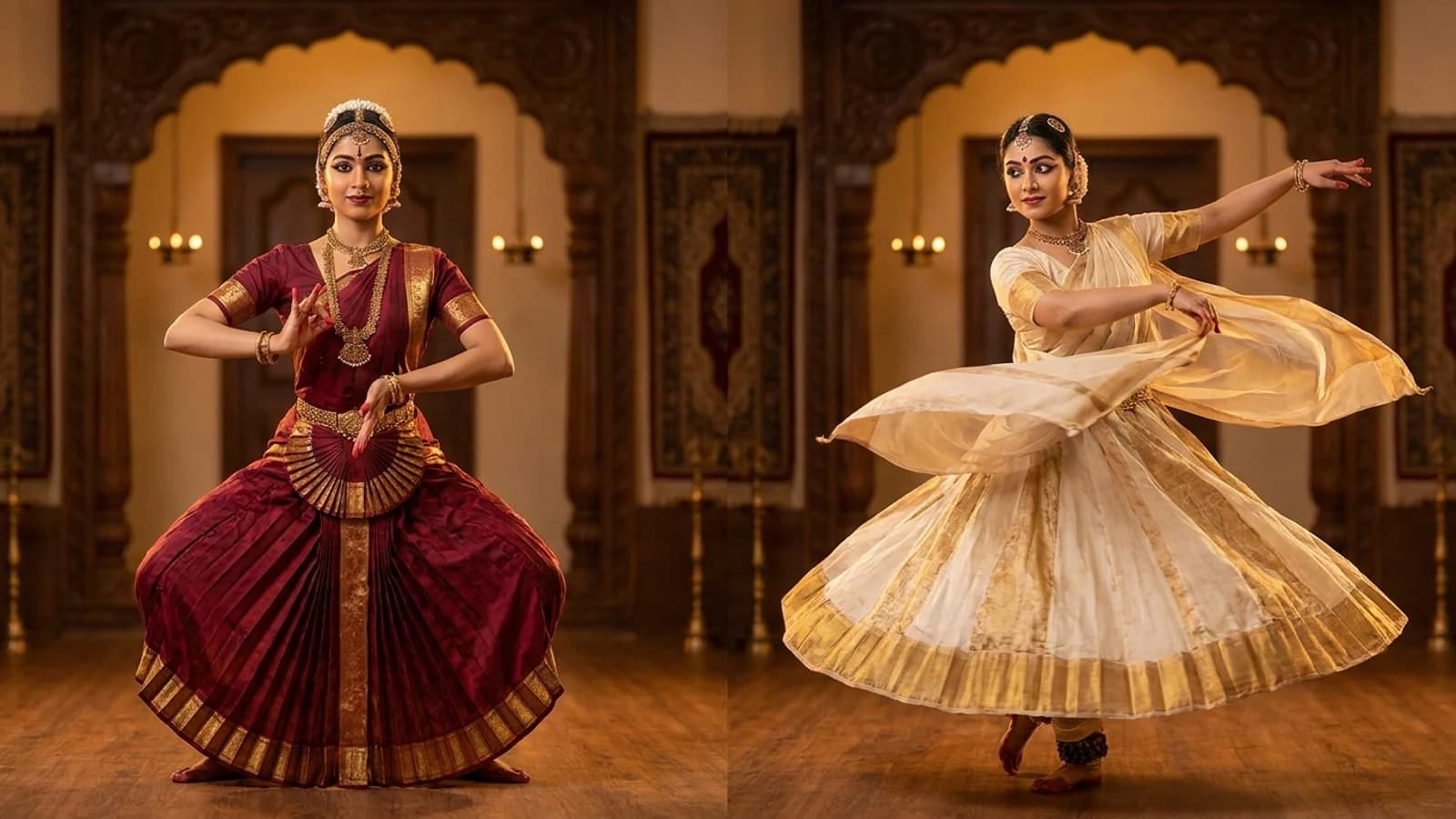
- Bharatanatyam has pyjama and saree styles with a pleated fan; Kuchipudi usually has one longer fan; Mohiniyattam uses a white-and-gold saree.
- Silk, cotton and zari choices should match your stage, climate and budget, not just appearance.
- Custom tailoring needs time, so plan backwards from your performance date.
- Proper storage and gentle care make a costume last many seasons.
Why the Costume Matters Before the First Step
A traditional dance costume does more than dress a performer. It frames the body's lines, makes the mudras and footwork legible from the back row, and signals the tradition the dancer belongs to. In Bharatanatyam, Kuchipudi and Mohiniyattam, the costume is part of the language of the art.
Over six decades we have seen the same pattern again and again: a dancer buys an attractive costume online, performs in it once, and then spends the whole recital adjusting a waistband that was never cut for their frame. The costume that is right for a dancer is the one they forget they are wearing.
Know Your Style: Bharatanatyam, Kuchipudi and Mohiniyattam
Each form has its own look, and buying without knowing it leads to the wrong garment.
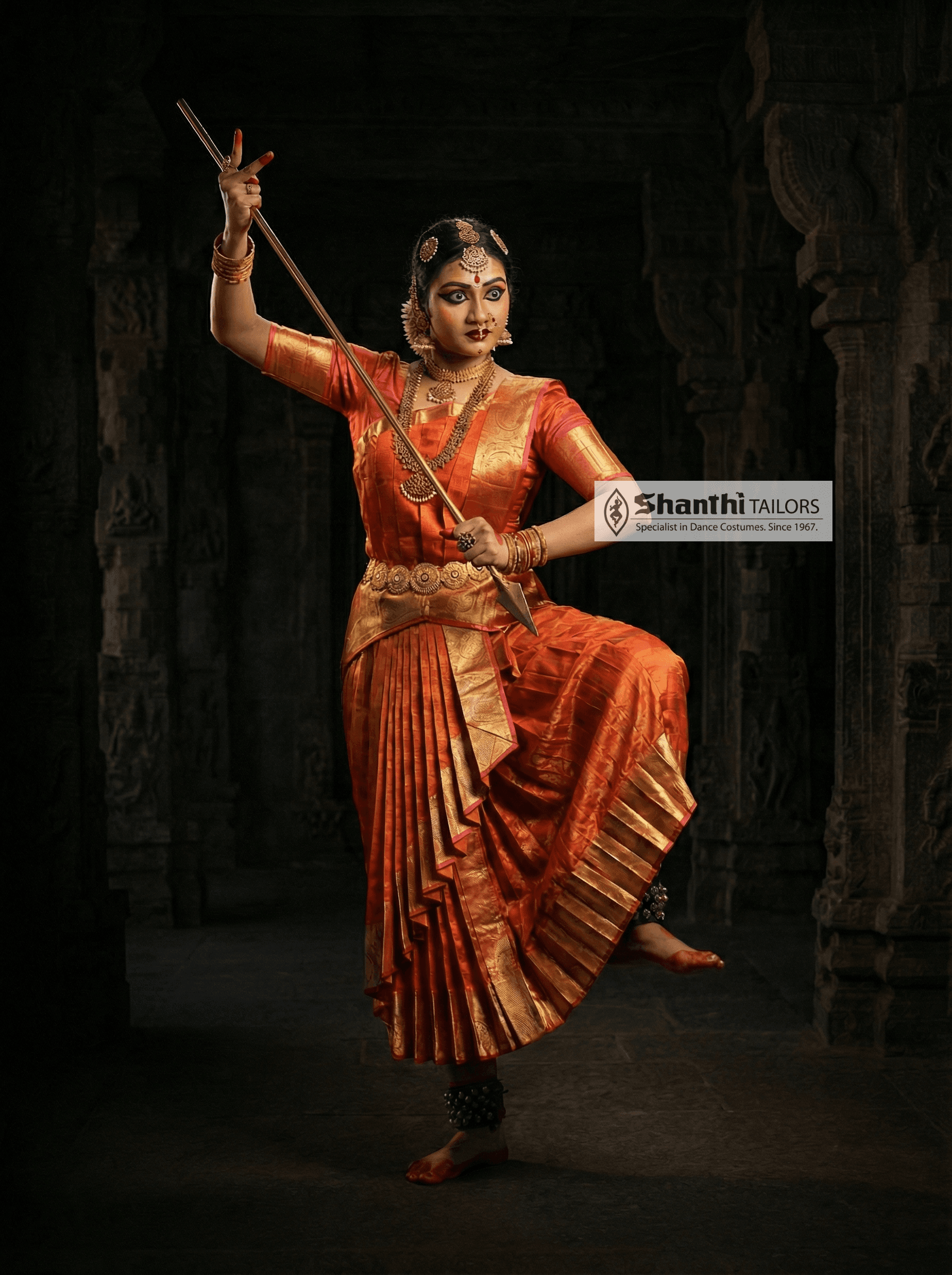
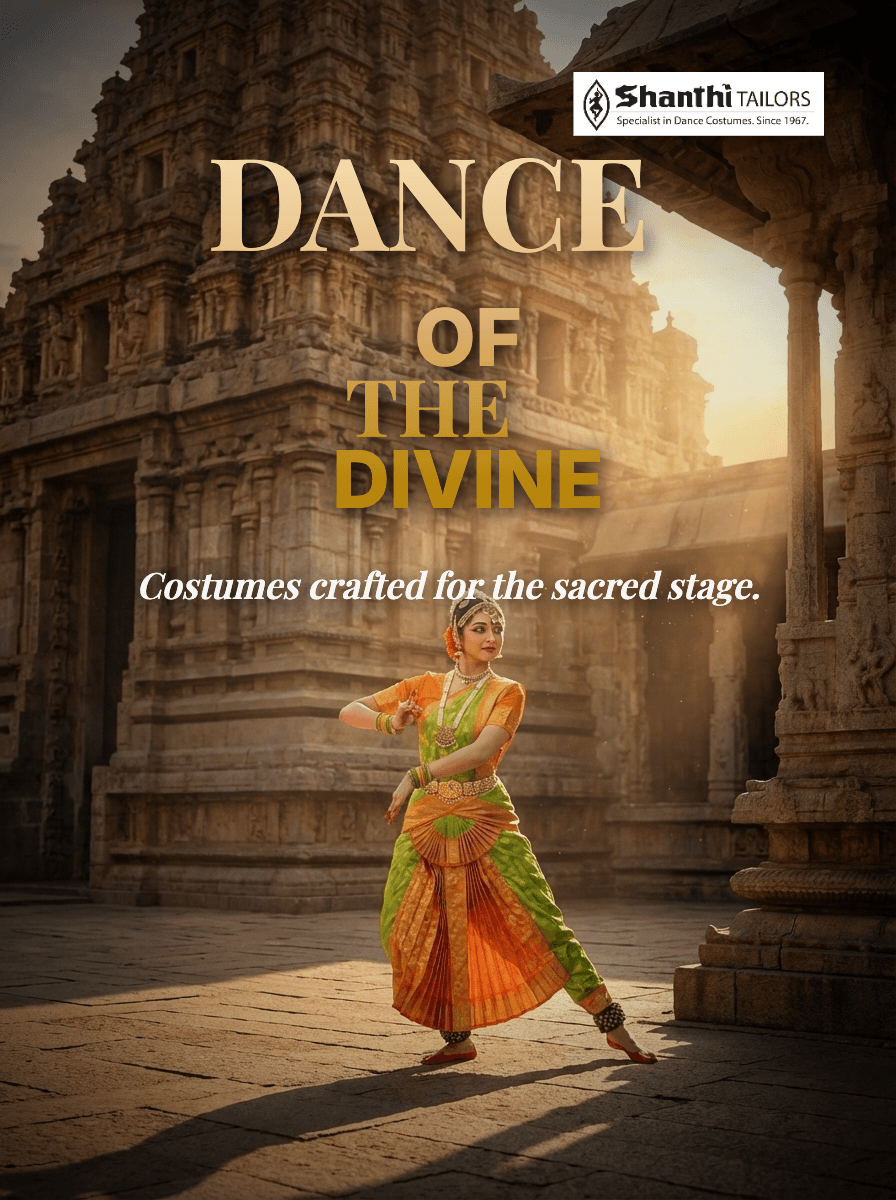
Bharatanatyam costumes come in two main styles: the pyjama (trouser) style and the saree (skirt) style. Both have a pleated fan at the front that opens out when the dancer sits in aramandi, a fitted blouse, and a waist belt (oddiyanam) with temple jewellery. Fan length varies, and your teacher may prefer one.
Kuchipudi costumes look similar to the Bharatanatyam saree style, but usually have a single, longer fan rather than layered fans.
Mohiniyattam uses a white or off-white saree with a gold border, draped to keep the movement soft and the silhouette understated.
Before you shop, watch a senior dancer in your style and note the costume's line and colours. Your teacher's guidance on school-specific details is valuable, since practice differs between schools.
Fabric and Construction: What Actually Matters
Fabric determines how a costume moves, breathes and photographs. The most common choices for traditional dance costumes are:
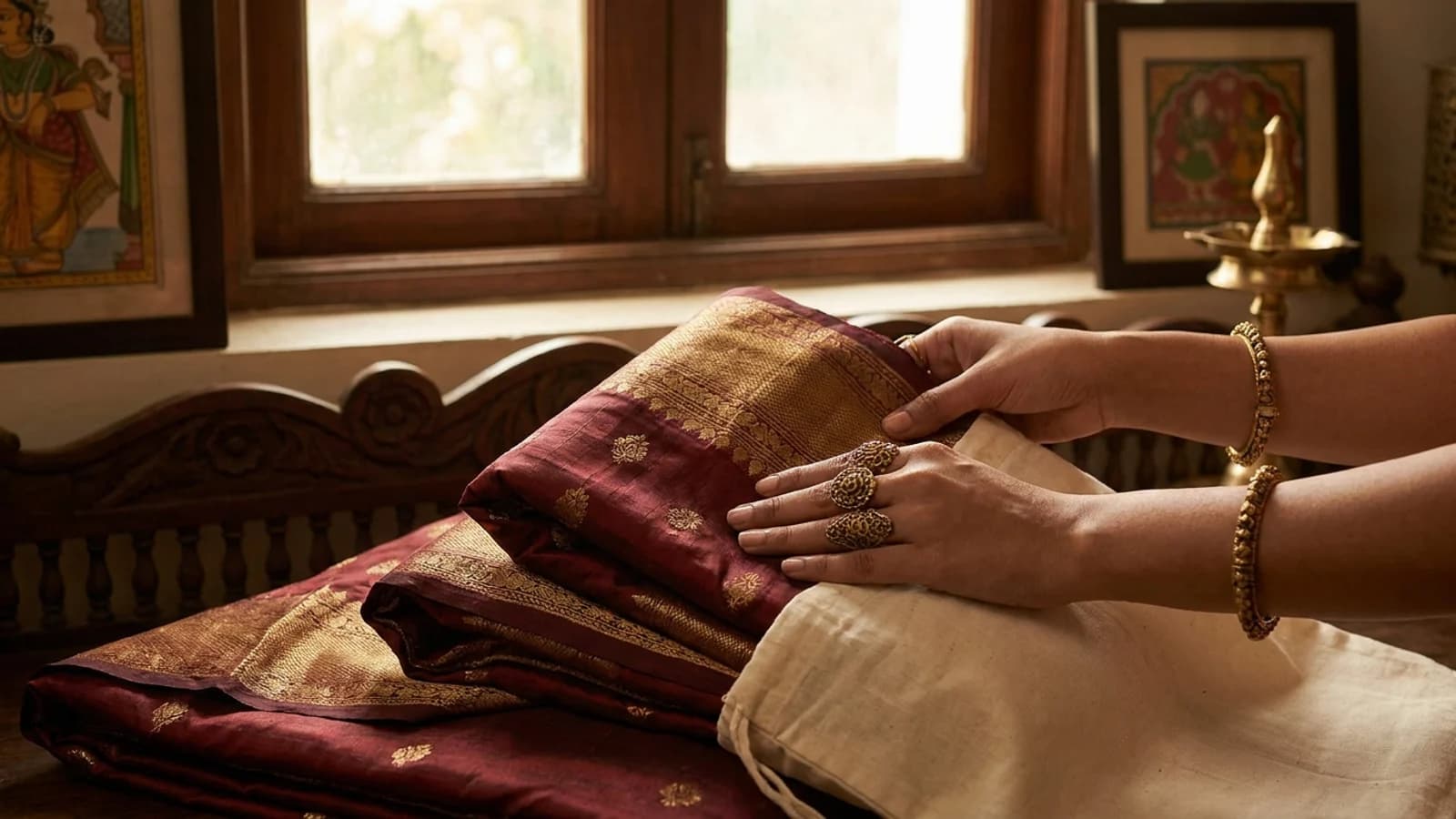
- Pure silk — Kanchipuram and Dharmavaram silks are the classic choice for performance costumes. It drapes beautifully and catches light, but it can be warm and needs careful handling.
- Silk-cotton blends — a practical middle ground for rehearsal and hot venues, with better breathability and lower cost.
- Cotton and cotton-silk — ideal for practice costumes and training, which should be washable and forgiving.
- Brocade and zari work — gold or silver thread, usually on borders and the blouse. Check whether the zari is real metallic thread or imitation, since this affects tarnishing and cost.
On construction, look for French seams or enclosed seams on high-stress areas, reinforced underarms, a lined bodice, and hems that lie flat. Check that pleats are stitched through the fabric rather than pinned or glued, and that the waist belt (oddiyanam) is secured with hooks rather than loose ties that slip during a jump. Hand-finished embroidery should have consistent stitch density; loose threads and fraying appliqué are early warning signs of a poor build.
Fit: The Single Biggest Factor
A costume that fits will look better than a more expensive one that does not. For traditional dance costumes, fit is not just about the bust and waist. It concerns the way the pleats and fan sit at the hips and open in aramandi, the length of the blouse at the back, the mobility of the shoulders and the hem length relative to the feet.
Take these measurements before ordering, using a soft tape and having someone assist you: bust (fullest point), underbust, natural waist, hip (fullest point), inseam (for the pyjama style), back length from the nape to the waist, shoulder width, arm length and the ankle-to-floor length you want. Note the height at which you normally wear your waistband. If you are between sizes, choose the larger measurement for the blouse and discuss alterations for the rest.
Always ask whether the costume is made to measure or ready to wear. Ready-made garments are sized for an average body; made-to-measure pieces are cut for yours, which is the difference between a costume that performs for you and one you perform around.
Timelines, Planning and Ordering from Abroad
Custom work takes time, and the more elaborate the zari and embroidery, the longer it takes. Plan backwards from your performance date. Our custom-stitched costumes take about 30 days to make, plus shipping time to your country; ready-made items are dispatched in about 5 days.
If you are ordering from overseas, add time for international shipping and customs, and leave a margin for one alteration. Send clear photographs of the style and border you want, your measurements with the method you used, and any notes on your stage and climate. Keep a record of what was agreed: fabric, colour, zari type and delivery date.
Care, Storage and Making a Costume Last
A traditional dance costume is an investment, and it rewards careful handling. Follow these steps to protect it:
- Dry-clean silk and zari costumes; never machine-wash or wring them. Air them flat in the shade after each performance before putting them away.
- Iron silk on the reverse side at a low setting, with a cloth between iron and fabric. Iron zari work carefully from the back to avoid flattening the thread.
- Store costumes folded loosely, not hung for long periods, to prevent stretching at the shoulders. Keep pleats supported with acid-free tissue.
- Wrap jewellery and metallic elements separately to avoid snagging and tarnish, and keep the space dry, since humidity damages silk and zari.
- Rotate between two costumes where possible, so each has time to rest between performances.
With this care, a well-made costume can serve a dancer through many seasons of performance and teaching.
Choosing Well: A Short Checklist
Before you commit, ask yourself: Does the style match the form I study and my teacher's school? Does the fit suit my measurements and movement? Is the fabric right for my stage and climate? Is the construction sound at the seams, hems and waist? Can I work to a realistic timeline? And does the seller explain what they make, how they make it and how they will support alterations?
A good atelier will welcome these questions, because the best costumes are the result of a conversation between the maker and the dancer. Take your time, ask for fabric samples, and choose the costume that lets you forget your clothes and remember the dance.
Frequently asked questions
How long does a custom dance costume take to make?
Our custom-stitched costumes take about 30 days to make, plus shipping time to your country, so order well ahead of your performance date.
What is the difference between ready-made and made-to-measure costumes?
Ready-made costumes are sized for an average body and may need alteration. Made-to-measure costumes are cut from your own measurements, which generally gives better fit, comfort and movement.
Which fabric is best for a Bharatanatyam costume?
Pure silk is traditional and drapes beautifully for performance pieces. For rehearsals or hot venues, a silk-cotton blend or cotton is more practical and easier to care for.
How do I measure myself for a dance costume?
Use a soft tape and, ideally, have someone help. Measure bust, underbust, natural waist, hip, back length, shoulder width, arm length and the length you want from waist to floor, and note where you usually wear your waistband.
How should I care for silk and zari costumes?
Dry-clean silk and zari costumes rather than washing them at home, air them in the shade after use, and iron on the reverse at a low setting. Store folded loosely in a dry place, and wrap jewellery separately to prevent tarnish.
Shop this look
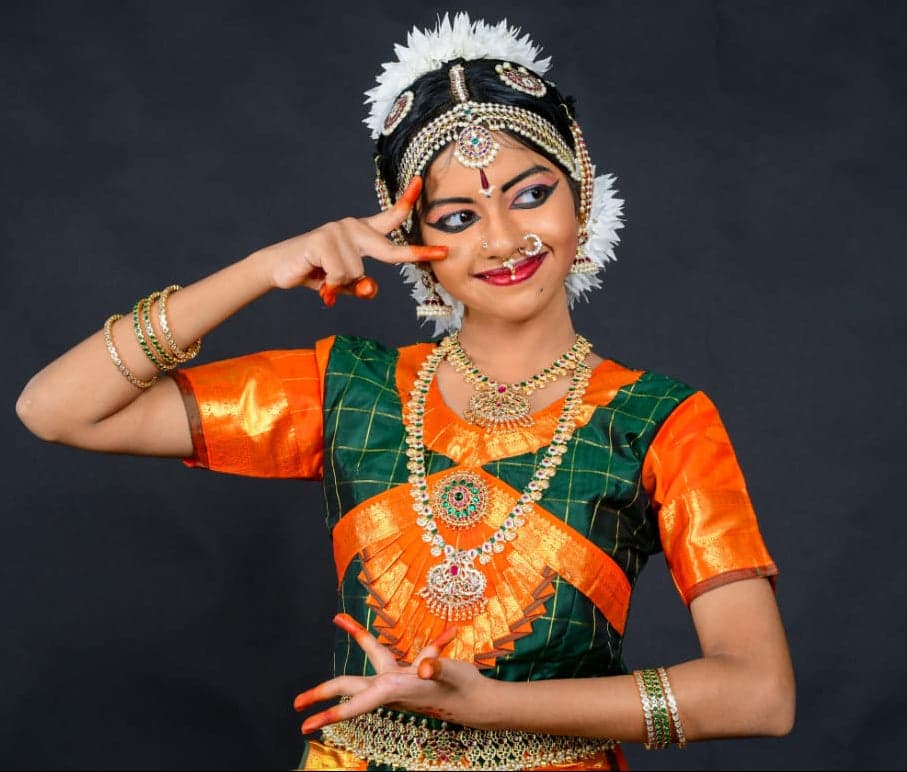
KIDS PANT COSTUME | Bharatanatyam costume
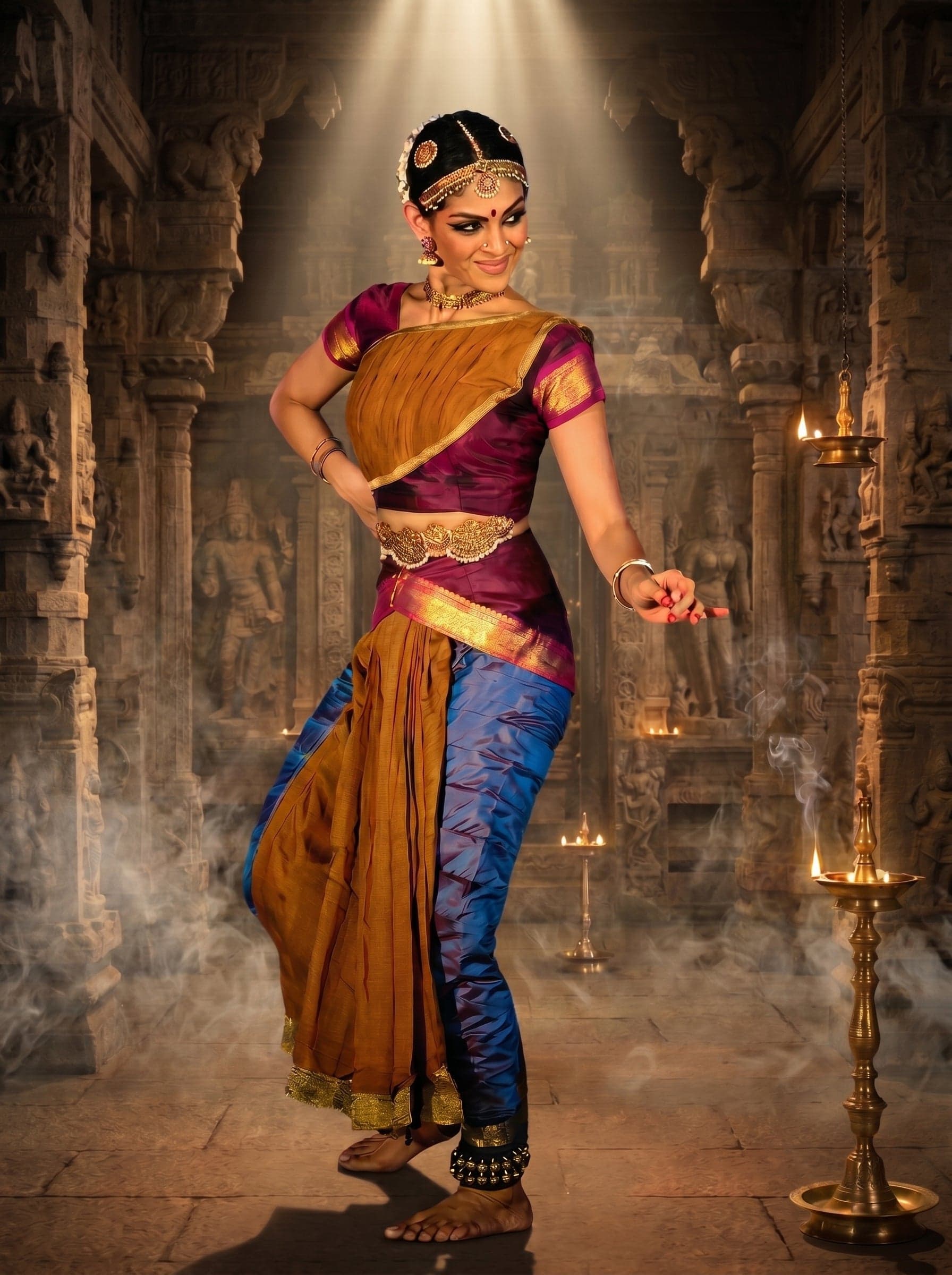
Rukmani Style Katcham | Bharatanatyam Costume | Custom Tailored Silk (Est. 1967)
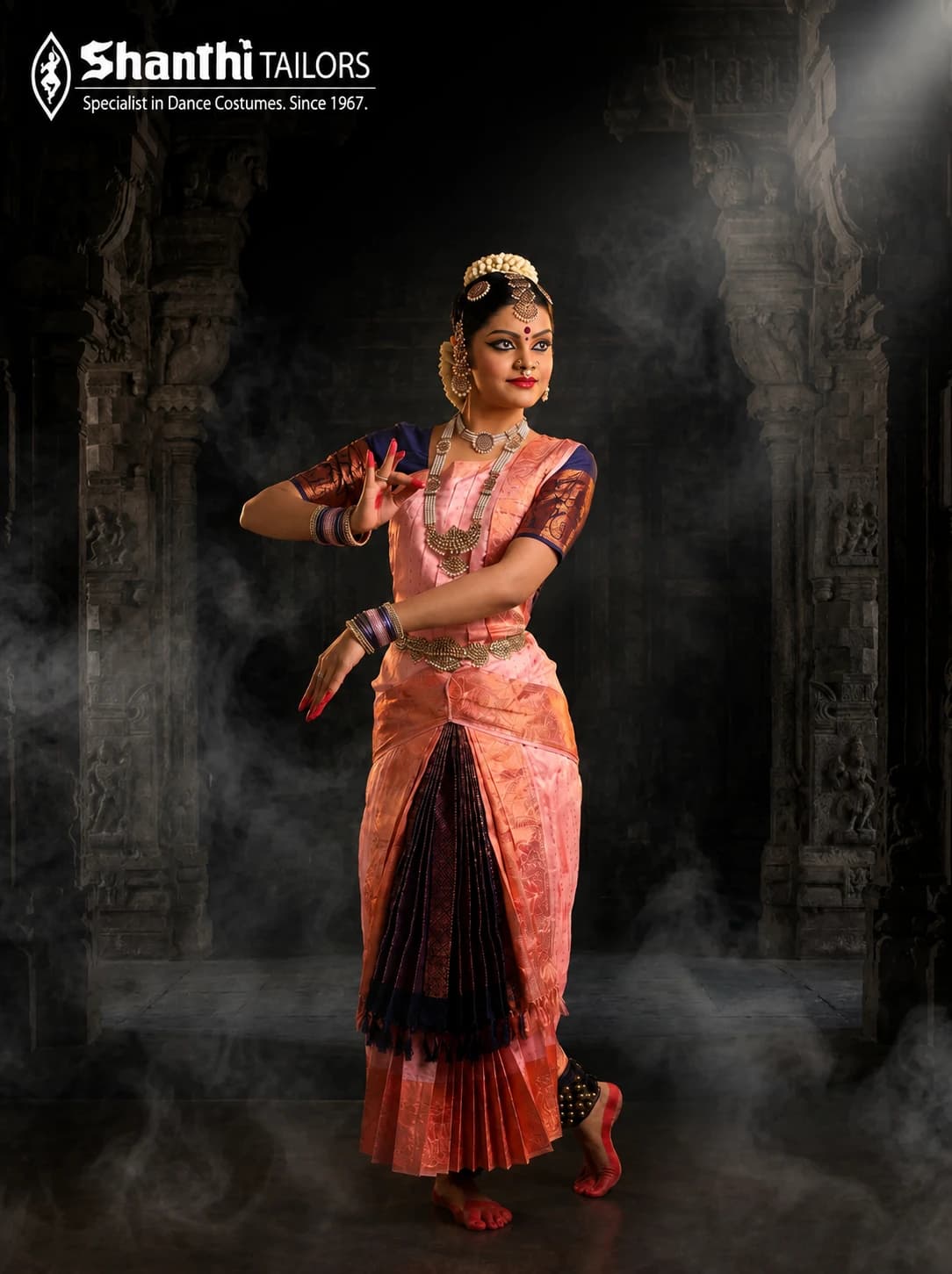
Skirt Model - Kalkeshtra Style for Bharatnatyam | bharatanatyam costume
Skirt Style Cross Fan | Bharatanatyam Costume | shanthitailors
Sun Fleets (Thalipil) Bharatanatyam Costume | Long Fan Style | Custom Tailored Silk (Est. 1967)
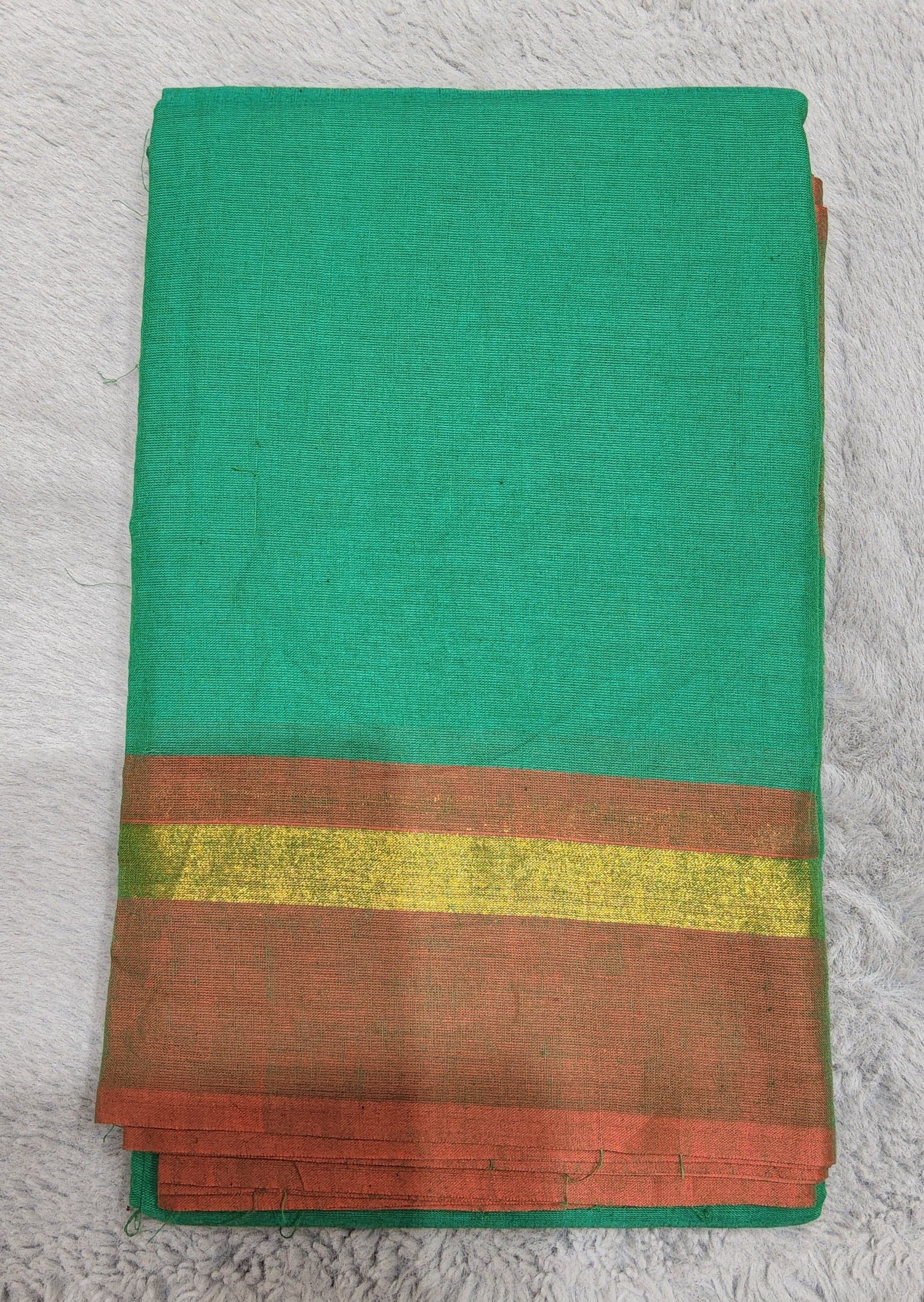
Zari Border | Practice Saree
Shanthi Tailors Editorial
Shanthi Tailors has crafted classical dance costumes and temple jewellery in Chennai since 1967, dressing dancers for arangetrams and stages worldwide.