Original Kemp Stone Temple Jewellery Sets Online: How to Buy with Confidence
Kemp stone temple jewellery is only as good as its stones and its craft. Here is how to tell a well-made set from a cheap one, and how to choose one that will last through years of performance.
On this page
Key takeaways
- Kemp stones are man-made ruby-red and emerald-green stones; 'original kemp' means a well-made set, not a natural gemstone.
- Judge a set by even colour, stones held by the setting (not glued), the base metal and the quality of the gold plating.
- Ask for the weight and a photo of the back before you buy online.
- Order well before your performance date, especially for made-to-order sets.
- Store pieces flat, dry and away from perfume, and wipe them after every performance.
What Kemp Stone Actually Is
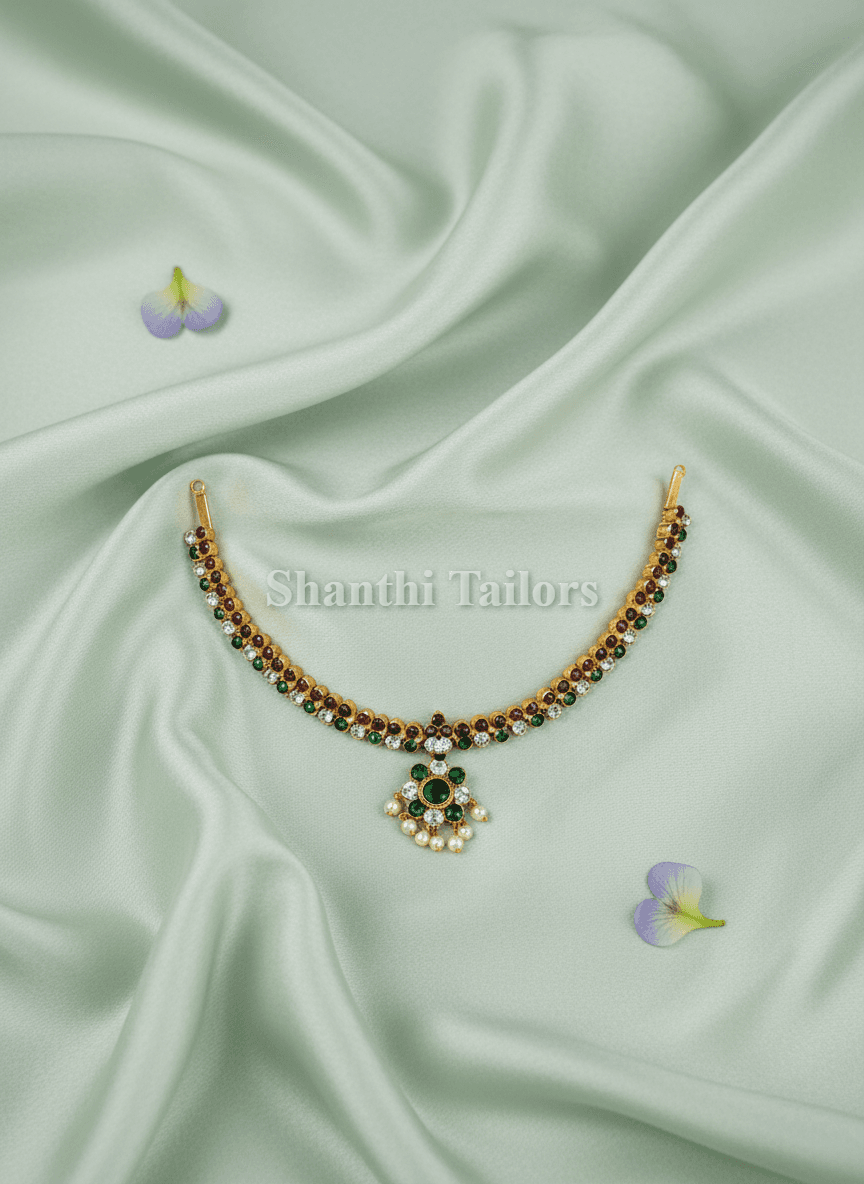
The name comes from kempu, the word for red in Kannada and Tamil. Kemp stones are the deep ruby-red and emerald-green stones that give South Indian temple jewellery its look. Old temple pieces were set with real rubies and emeralds; the kemp stones used today are man-made stones cut and coloured to carry the same rich tones under stage light.
So when a seller says original kemp, it does not mean a natural gemstone. It means a well-made set: stones with deep, even colour, set securely in metal, on a base that is finished to last. That is what you are really judging when you buy online.
How to Tell a Well-Made Set from a Cheap One
You cannot hold the piece when you shop online, so read the listing closely and ask specific questions:
- Colour: good kemp stones are a deep, even red or green across the whole set. Pale, patchy or mismatched stones are the first sign of a cheap set.
- Setting: each stone should be held by the metal setting, not simply glued on. Glued stones are the ones that fall out in the middle of a performance.
- Base metal and plating: ask whether the base is silver or an alloy, and how it is gold-plated. Thin plating that wears through or flakes is the most common complaint about cheap sets.
- Back and finish: ask for a photo of the back. Clean, smooth finishing behind the stones shows care; rough edges scratch the skin and the costume.
- Weight: ask for the weight of the main pieces. It tells you more than any adjective.
A reputable seller answers these in plain terms. Words like 'premium' or 'authentic' with no detail are a warning sign.
The Main Types of Kemp Temple Jewellery Sets
Temple jewellery is not one item but a family of pieces that complete a costume. A full set often includes:
- Kasu malai or long necklace: a long chain of gold-coloured coins or discs, often with kemp centre pieces, that falls to the waist.
- Choker and short necklace: sits close to the throat and frames the neckline of the blouse.
- Jhumkas or earrings: the classic bell-shaped drops, often with kemp settings and a hanging fringe.
- Vaanki or armlet: a wide upper-arm band that anchors the costume visually.
- Bangles and rings: kemp-set bangles are usually lighter and sold in pairs or sets of six.
- Nethi chutti or forehead piece and maang tikka: the head ornament that frames the face.
For a dancer, the practical choice is whether to buy a complete coordinated set or to build a set piece by piece. A coordinated set guarantees matching tones and weight distribution. Building piece by piece can work well if you already own a long necklace and want to add matching earrings or armlets later.
Choosing the Right Set for Your Dance and Your Body
Temple jewellery must work with a costume, a hairstyle, and a stage. Consider these practical points before you buy:
- Weight: a full set can weigh several hundred grams. If you dance for long periods or perform multiple productions in a week, prioritise lighter lac-based builds over heavy solid-metal pieces.
- Style and tradition: Bharatanatyam, Kuchipudi, and Mohiniyattam each have their own conventions for jewellery. Choose pieces that suit the tradition you perform, and check with your guru if you are unsure.
- Stage lighting: red and green kemp both glow under warm stage lighting; very deep tones may need brighter light to show their colour.
- Neck and ear measurements: a long necklace should sit at the correct point on your torso when you are in your standing posture, not too high or too low.
Before ordering, measure your neck circumference, the drop you want for a long necklace, and your earlobe position. If you are unsure, send photographs and your measurements to the seller and ask for guidance.
Timelines, Custom Orders, and Shipping
Ready-made sets ship faster; made-to-order sets take longer and are worth it when you need a particular size or colour balance. Our temple jewellery is dispatched in about 5 days, plus shipping time to your country. If you have a performance date, order early: a rushed set is rarely the one you want to wear on stage.
For international orders, check that the seller packs jewellery in padded boxes and provides tracking. Photograph the set when it arrives, in case you need to raise a query.
Care, Storage, and Making a Set Last
Kemp pieces reward careful handling. Follow these steps to keep a set looking its best for years:
- Wipe the metal and stones with a soft, dry cloth after every performance to remove perspiration and makeup.
- Keep the set away from perfume, hairspray, and oils, which can dull the finish and affect lac-based builds.
- Store pieces flat in a lined box or pouch, separated so stones do not knock together. Hanging long necklaces by a single point can stretch the chain.
- Keep the set in a dry place. Heat can soften the lac base, and humidity encourages tarnish on the metal.
- Have loose stones or clasps repaired promptly by a jeweller who understands temple work, rather than by a general repairer who may use the wrong adhesive.
With these habits, a well-made kemp set can serve a dancer across many productions and, in many families, be passed down to the next generation.
Why Provenance and Craft Matter
Temple jewellery is more than an accessory. It carries the visual language of the temple sculpture and the devotional traditions that shaped classical dance. When you buy an original kemp set, you are supporting the artisans who set the stones and hand-finish the metalwork. A seller who can describe the workshop, the stone sourcing, and the finishing process is one who respects that lineage.
At Shanthi Tailors we have been dressing classical dancers in Chennai since 1967, and we would rather tell you exactly how a piece is made than promise you something we cannot describe. If you have questions about a specific set, our team is glad to help you choose.
Frequently asked questions
Are kemp stones natural gemstones?
No. Old temple jewellery used real rubies and emeralds, but the kemp stones used today are man-made stones in ruby-red and emerald-green. Quality depends on the colour, how securely they are set, and the base metal and plating.
Is a heavier temple jewellery set better quality?
Not necessarily. Many traditional sets use lac or wax bases, which are lighter and comfortable for long performances. Very heavy sets can be solid metal, which is not always the most suitable for dancing. Choose weight based on how and how long you will wear it.
How far in advance should I order a kemp set?
Our jewellery is dispatched in about 5 days, plus shipping time to your country. Order well before your performance so you have time to try the set.
How do I clean kemp temple jewellery safely?
Wipe with a soft, dry cloth after use and avoid water, perfume, and harsh chemicals. Do not soak the set. Store it flat in a dry, lined box away from humidity.
Can I wear kemp jewellery for Bharatanatyam, Kuchipudi, and Mohiniyattam?
Yes, though styles and conventions vary between traditions. Choose pieces that match your tradition, and consult your guru if you are unsure which set is appropriate for your repertoire.
Shop this look

1 Line Stud | Original Temple Jewellery
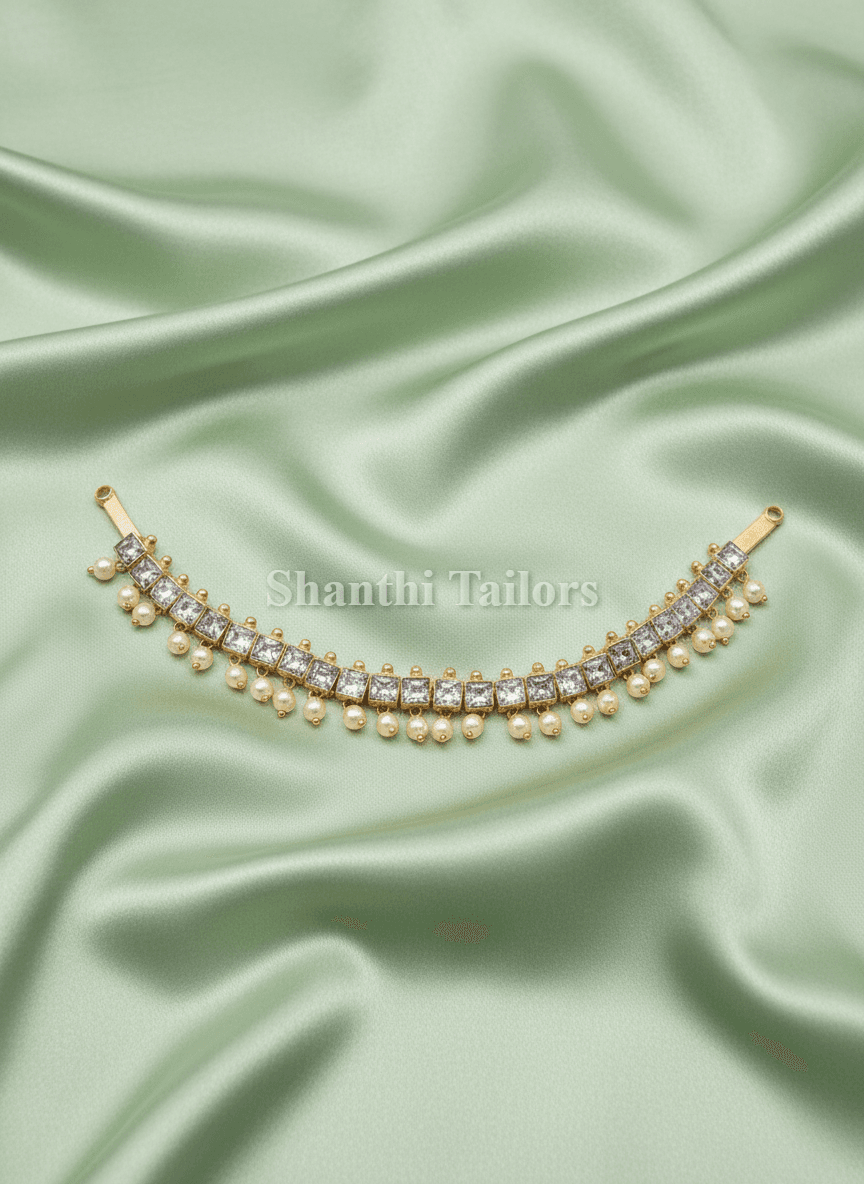
1 Stone Square Necklace | Original Temple Jewellery | TJAYY48

2 Stone Attiyal Necklace | Original Temple Jewellery
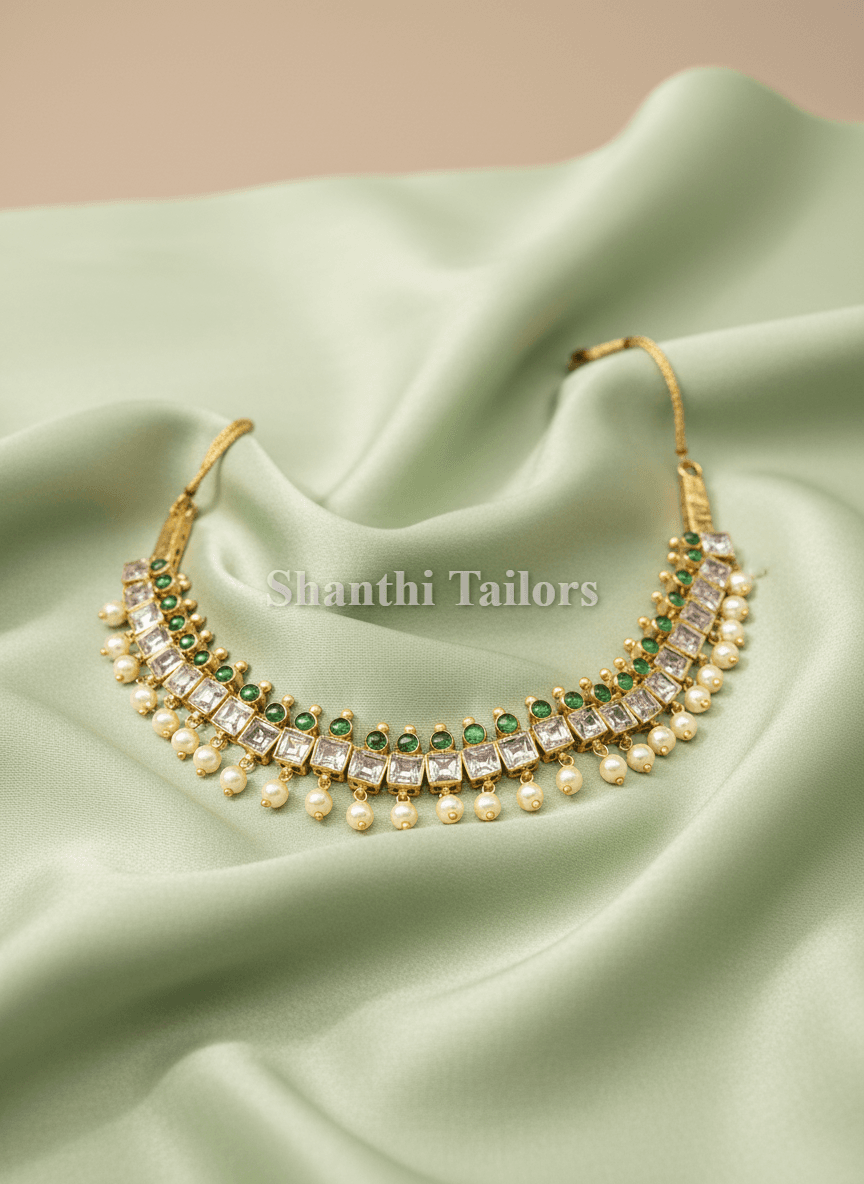
2 Stone Square Round Necklace | Original Temple Jewellery | Necklace | TJAYY51
2-Stone Attigai – Red Kemp Design | Original Dance Temple Jewellery
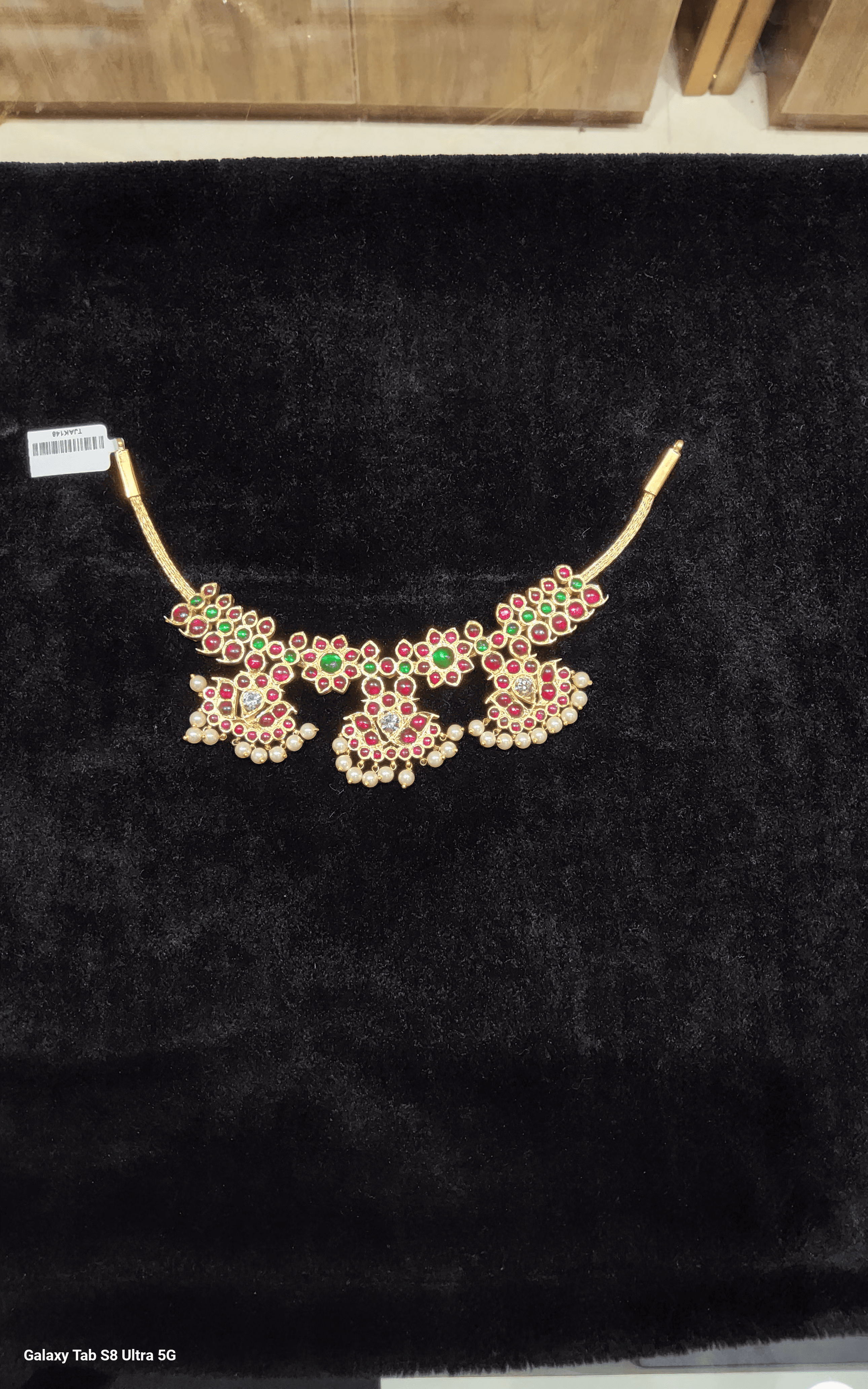
3 Pcs Mango Necklace | Original Temple Jewellery
Shanthi Tailors Editorial
Shanthi Tailors has crafted classical dance costumes and temple jewellery in Chennai since 1967, dressing dancers for arangetrams and stages worldwide.