The Complete Glossary of Bharatanatyam Costumes & Jewellery
A Guide for Dancers & Parents by Shanthi Tailors (Est.
🎧 Listen to this article
A Guide for Dancers & Parents by Shanthi Tailors (Est. 1967)
Introduction
Stepping into the world of Indian classical dance can be overwhelming. From the intricate pleats of the costume to the specific names of temple jewellery pieces, there is a rich vocabulary that every dancer should know.
At Shanthi Tailors, we have been crafting these traditions since 1967 in Mylapore, Chennai. To help you prepare for your practice or your Arangetram, we have compiled this definitive glossary of essential Bharatanatyam terms.
Part 1: The Costume (Nirthya Vasthra)
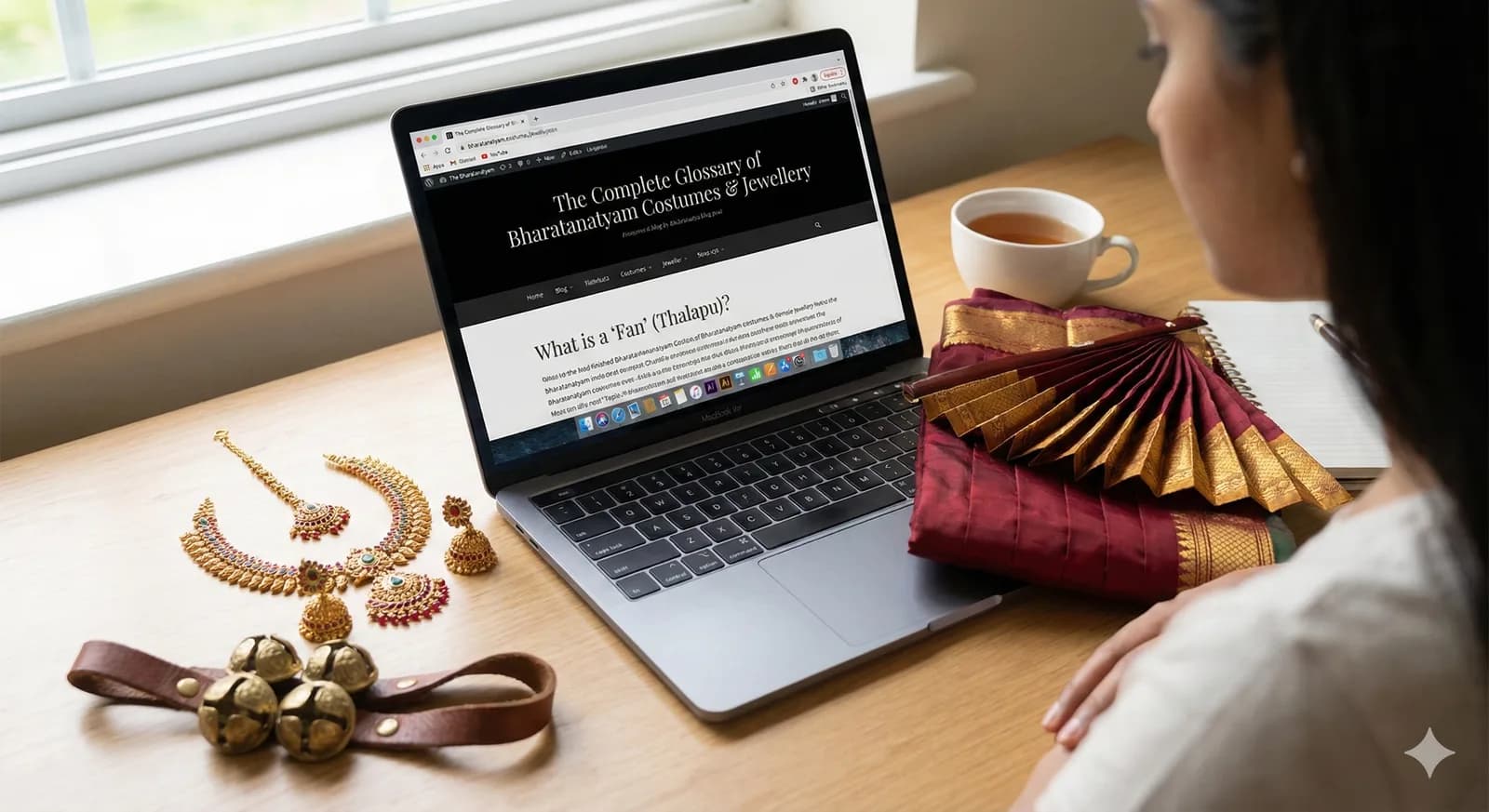
What is a "Fan" (Thalapu)?
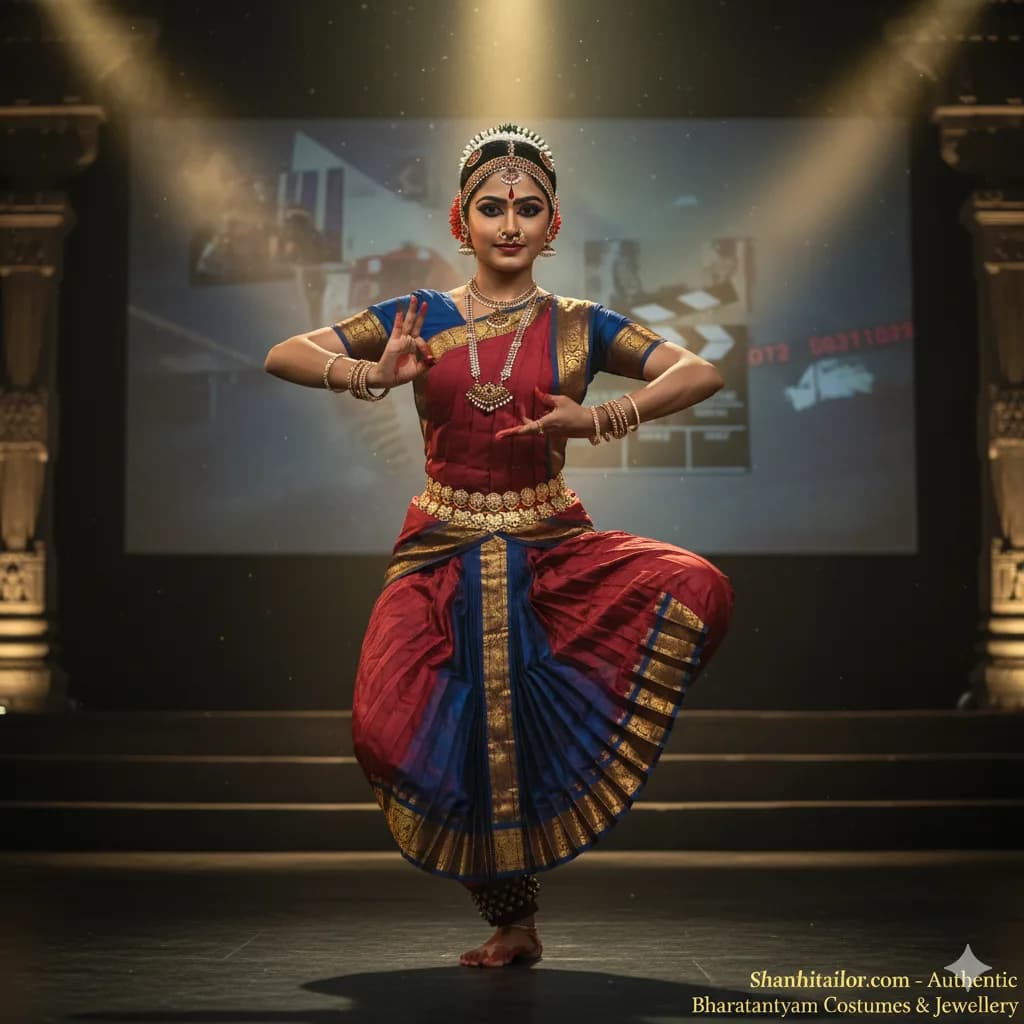
Definition: The Fan (or Thalapu in Tamil) is the central pleated portion of a Bharatanatyam costume, attached to the waist. It is the most critical visual element of the attire. When the dancer executes the Araimandi (half-sitting posture), the fan opens fully to create a structured, geometric silhouette.
-
Types: At Shanthi Tailors, we craft these in 3-step, 4-step, or 5-step variations depending on the dancer's height and leg length.
What is the difference between a Skirt Costume and a Pant Costume?
Definition:
-
The Skirt Costume: Resembles a traditional saree. When the dancer stands, it looks like a draped saree; when they sit, the fan opens. This is the most popular style for Arangetrams.
-
The Pant Costume: Features stitched trousers instead of a skirt. This style offers maximum freedom of movement and is often preferred for male dancers or for younger students who require ease of movement during complex footwork.
What is a "Dharmavaram" Silk Costume?
Definition: Dharmavaram is a type of silk saree originating from Andhra Pradesh, famous for its broad, solid-colored borders and contrasting pallus. It is the gold standard fabric for Bharatanatyam costumes because it is durable enough to hold the heavy pleats of the fan while maintaining a rich, lustrous sheen under stage lights.
Part 2: The Jewellery (Temple Jewellery)
What is Temple Jewellery (Kemp Jewellery)?
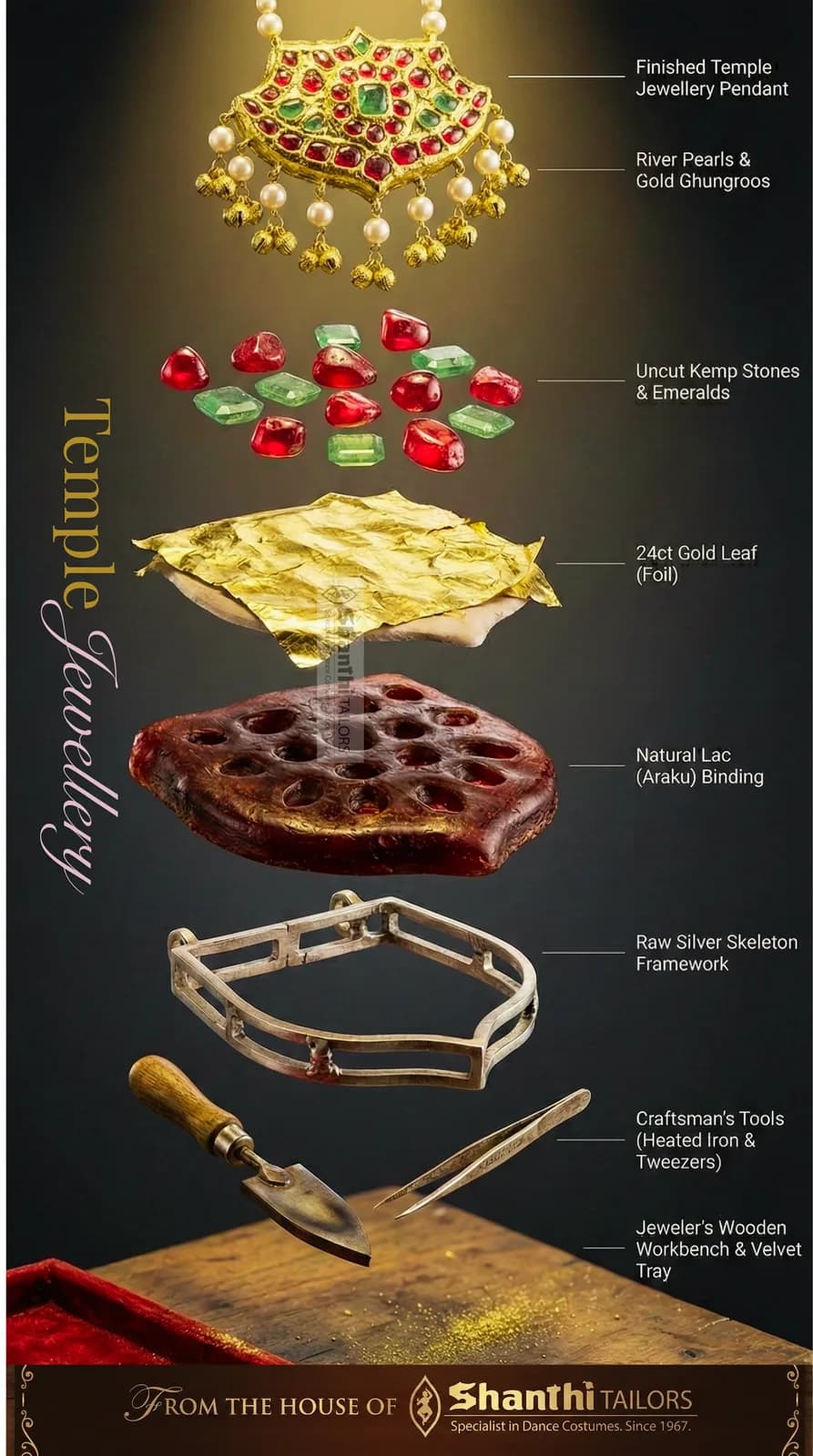
Definition: Temple Jewellery is the traditional gold-finished jewellery worn by Bharatanatyam dancers. Authentic temple jewellery is characterized by Kemp stones—uncut polished stones in deep red and green—set in silver or copper and dipped in gold leaf. Historically, these designs were crafted in Vadasery, Nagercoil for temple deities.
What is the "Nethi Chutti"?
Definition: The Nethi Chutti is the forehead ornament worn along the central hair parting. It frames the dancer's face and draws attention to their expressions (Abhinaya). It is typically accompanied by the Surya (Sun) and Chandra (Moon) ornaments placed on the left and right sides of the head, representing cosmic balance.
What is an "Oddiyanam"?
Definition: The Oddiyanam (or Vadiyanam) is the waist belt worn over the costume. It serves two purposes:
-
Aesthetic: It clinches the waist, accentuating the dancer's figure and the structure of the costume.
-
Functional: It helps hold the heavy costume and pleats firmly in place during vigorous movement.
What is a "Rakodi"?
Definition: The Rakodi is a round, jewelled ornament worn on the back of the dancer's head, directly over the hair bun (Kondai). In traditional beliefs, it represents the "thousand-petaled lotus" or the cycle of life, but functionally, it covers the hair accessories and adds grandeur to the dancer's profile when they turn.
Part 3: Dance Essentials
What are "Salangai" (Ghungroo)?
Definition: Salangai (in Tamil) or Ghungroo (in Hindi) are the musical anklets worn by Indian classical dancers. They consist of small brass bells stitched onto a leather or velvet strap. They are not just accessories; they are instruments that accentuate the rhythmic footwork (Talam) of the dancer.
-
Beginner vs. Pro: Beginners typically wear 2-line or 3-line Salangai, while professionals may wear 4-line or 5-line sets for a richer sound.
What is an "Arangetram"?
Definition: An Arangetram (literally "ascending the stage") is the debut on-stage performance of a classical dance student. It marks the transition from a student to a performing artist. For this milestone event, dancers typically order a custom-fit Silk Costume and a brand-new set of Temple Jewellery to mark the auspicious occasion.
Need Help Measuring?
Ensuring the perfect fit is vital for a dancer's confidence.
-
Contact Us: Have a specific question? WhatsApp Shanthi Tailors at
-
+91 90033 26517.
Established in 1967, Shanthi Tailors is Mylapore's premier destination for Indian Classical Dance costumes and accessories.
Shanthi Tailors Editorial
Shanthi Tailors has crafted classical dance costumes and temple jewellery in Chennai since 1967, dressing dancers for arangetrams and stages worldwide.