
Bharatanatyam Dance Accessories Online: Bells, Anklets and Hair Ornaments, Explained
A practical, atelier-tested guide to buying Bharatanatyam accessories online — ghungroo bells, anklets, and hair ornaments — what to check, what to avoid, and how to choose well.
On this page
Key takeaways
- Judge salangai (ghungroo) by sound, matching bells and a well-stitched padded band, not just the number of rows.
- Order your accessories well before a performance to allow for fitting and changes.
- 'Silver finish' and 'solid silver' look alike in photos but differ in weight, tarnish and price.
- Measure your ankle, head and hair length before ordering, and check the return or exchange policy.
- Store bells dry and separately from silver to prevent tarnish and keep the sound clear.
Why Accessories Matter More Than Most Dancers Expect
In Bharatanatyam, sound is part of the grammar. The ghungroo on your ankles marks every adavu, every jati and every footwork pattern, so a poorly chosen set of bells does more than look untidy. It muddies the rhythm your guru and audience are listening for. The same is true of hair ornaments and temple-style pieces: they frame the face, keep the jadai (braid) balanced, and move with the head through the mudras and abhinaya.
Buying these pieces online makes sense for many dancers, especially those living outside India or in smaller cities where a good tailor or jeweller is hard to find. But because you cannot hold the bells or try on the anklet, you need a clearer checklist than a product photo gives you. This guide walks through what to look for, the main options, and how to choose with confidence.
Ghungroo: How to Judge Bells Before You Buy
Ghungroo, called salangai in Tamil and gejje in Kannada, are small brass or bell-metal bells. In Bharatanatyam they are usually sewn in rows onto a padded leather or cloth band that is tied around the ankle; bells strung on a long cord and wound around the leg are more typical of Kathak. A set is described by the number of rows and bells. Your guru will advise how many rows suit your level.
When you assess a set, listen for these qualities:
- Tone: A clear, round ring rather than a rattle. Good bells sound distinct when you tap them, and each bell should match its neighbours in pitch.
- Weight: Heavier bells are generally more resonant, but excessive weight tires the ankles during long practice. Ask for the weight per set if it is listed.
- Construction: The seam should be closed and smooth, with no open gaps. Check that the bells are firmly attached to the band and do not slide.
- Band and straps: A well-padded band with strong stitching and secure ties stays comfortable through a long practice. Thin bands and weak stitching are where sets fail first.
Because sound varies so much between sets, reputable sellers describe the bells in terms of the number of rows and the approximate size, and they often share a short video of the sound. If a listing offers no information beyond a stock photo, ask for more before buying.
Anklets (Kolusu / Payal)
Beyond the salangai, some dancers also wear a decorative anklet (kolusu or payal) for its line and shine on stage. These are about ornament, not rhythm.
- Metal: silver and silver-tone alloys are traditional and look elegant under stage lights; gold-tone alloys are a more affordable alternative. 'Silver finish' and 'solid silver' are very different, so confirm which one is being sold.
- Closure: hook, screw and adjustable chain closures each have pros and cons. Adjustable chains suit growing dancers.
- Comfort: heavy anklets can rub the ankle bone over a long performance; smooth interiors are kinder to the skin.
- Fit: measure your ankle at its narrowest point and add a finger's width.
Hair Ornaments: Jadai, Surya-Chandra and Temple Pieces
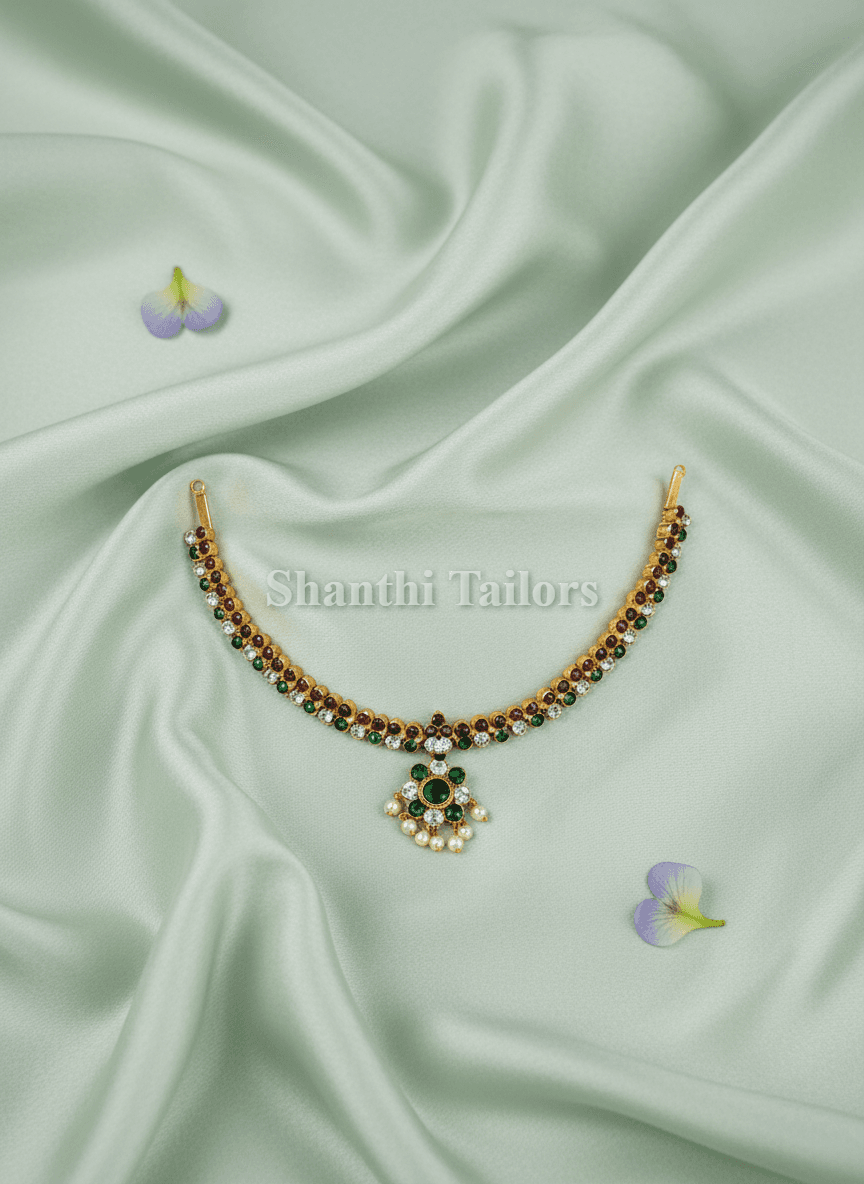
The hair is a key part of the Bharatanatyam look. A traditional set includes the nethi chutti on the forehead, the surya and chandra (sun and moon) pieces on either side of the parting, the rakodi at the crown, the jadai billai discs running down the braid and the kunjalam tassels at its end.
Look for these points when buying online:
- Attachment: check whether each piece is clipped, pinned or sewn to a base, and that it will hold through a full performance.
- Balance: a well-made jadai sits straight and does not pull to one side during head movements.
- Length and scale: choose the jadai length for your height and hair; oversized pieces overwhelm small frames.
- Finish: stones and beads should be set securely; loose stones are hard to repair mid-season.
Materials, Tarnish and Care
Most accessories fall into a few material families: brass and bell-metal (for ghungroo), silver and silver-tone alloy, gold-tone plating, and the leather or cloth bands and ties that hold the bells. Each behaves differently over time.
- Brass and bell-metal resist wear but can discolour. Wipe with a dry cloth after each use.
- Silver tarnishes with humidity and sweat. Store in an airtight pouch with a silica packet, and polish gently with a soft cloth.
- Plated alloys can wear through at contact points. Avoid soaking them and keep perfume and hairspray off the surface.
- Bands and ties should be dried completely after practice. Damp leather and cloth grow musty and weaken.
Store ghungroo flat or hung, away from silver, so that tarnish does not transfer. After each class, shake the bells out and check that the stitching and ties are still secure. A five-minute check each week prevents most mid-season breakages.
How to Choose: A Practical Buying Process
Buying well is mostly about preparation. Start by identifying what you actually need: a beginner's practice set, a stage-ready set for arangetram or a senior performance, or a replacement for a worn piece. Then follow a clear sequence:
- Plan the timeline. Our accessories are dispatched in about 5 days, plus shipping time to your country; order well before your performance. Allow time for shipping, which varies by destination, and for any adjustments.
- Measure. Take your ankle circumference, head circumference and hair length. Note your guru's advice on bell count and style.
- Read the listing closely. Look for material, weight, number of rows, closure type and dimensions. Be wary of listings that omit these.
- Check the policy. Confirm the return or exchange terms, especially for custom sizes, and whether shipping insurance is included for international orders.
- Ask your guru. A teacher will often know which sound suits a particular repertoire, and can tell you whether a piece is appropriate for your level.
When you receive your order, test everything before the performance. Dance in your bells for at least thirty minutes, check the anklet does not bruise, and make sure the hair ornament holds through a full adavu sequence. Any issue is far easier to fix at home than on stage.
Our Atelier's Advice
Over six decades of dressing dancers, we have learned that the best accessory is the one that disappears into the dance: the bells that ring cleanly on every beat, the anklet that never needs adjusting, the hair ornament you forget is there. Those results come from good materials, honest measurement and a little patience before the big day. Whatever you choose, buy for the dancer you are now and the performances you are preparing for, and treat your pieces with the same care your guru taught you to give your footwork.
Frequently asked questions
How many rows of salangai do I need as a beginner?
Follow your guru's advice on rows and sound. Lighter sets are easier on the ankles while footwork and stamina develop.
Can I buy Bharatanatyam accessories online without trying them on?
Yes, provided you measure carefully, read the full specifications and choose a seller with clear return or exchange terms. Ask for additional photos or a sound video for bells, and confirm the sizing before ordering custom pieces.
How far in advance should I order for an arangetram or performance?
Order well ahead, and earlier for custom sizing or made-to-order work, so there is time for shipping and adjustments. Our accessories are dispatched in about 5 days, plus shipping time.
Why do my bells sound dull or rattle instead of ringing?
Dull or rattling sound often comes from damaged bells, loose seams or inconsistent sizing across the set. Check each bell for dents or open seams, and make sure all bells are securely attached and the same size.
How do I stop silver anklets and hair ornaments from tarnishing?
Keep them dry, store them in an airtight pouch with a silica packet, wipe them after each use and keep perfume, hairspray and lotion off the metal. Polish gently with a soft cloth when tarnish appears.
Shop this look
Salangai | Shanthi Tailors
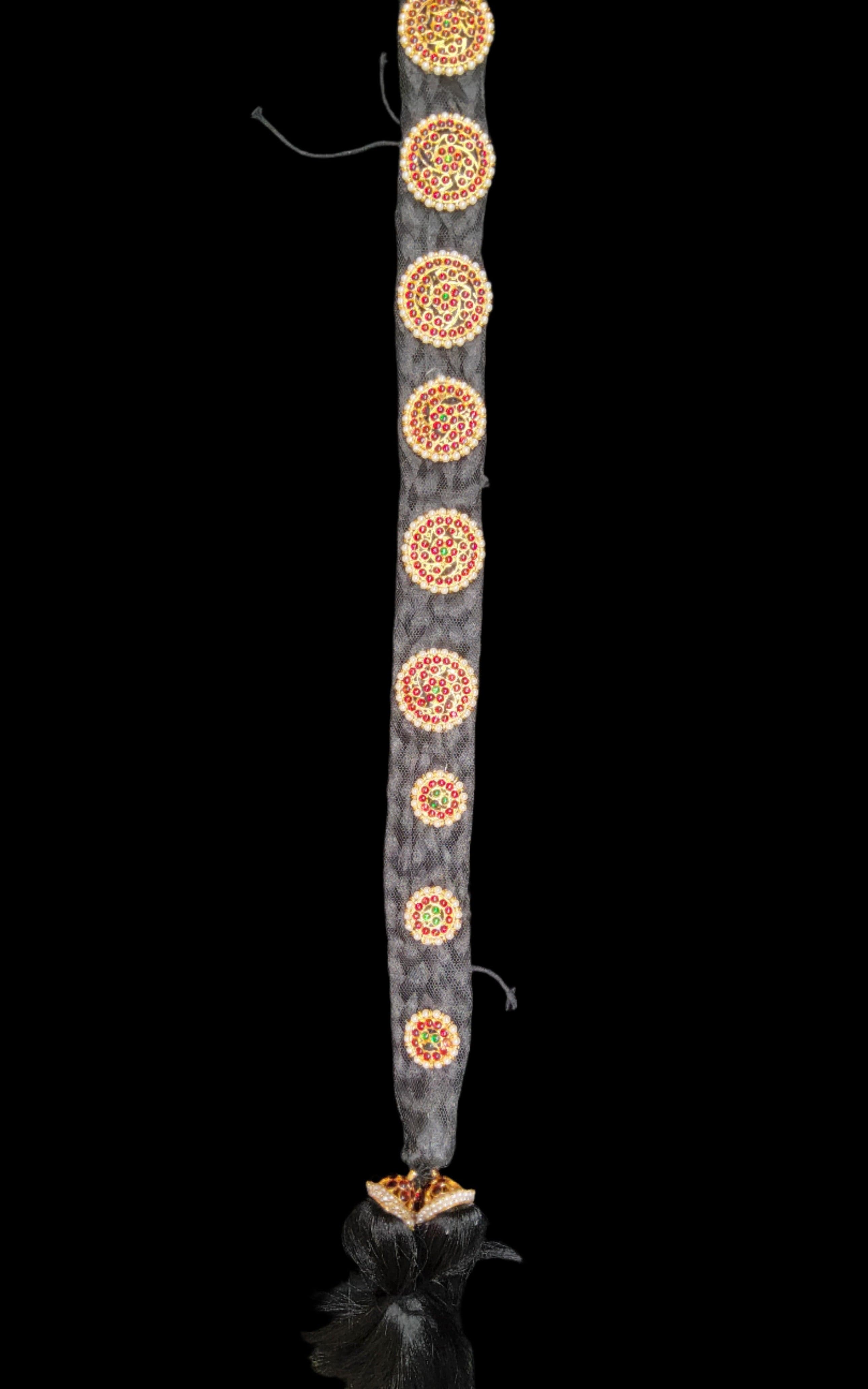
Readymade Jadai : Bharatanatyam Jadai | Ready to wear | Jadai
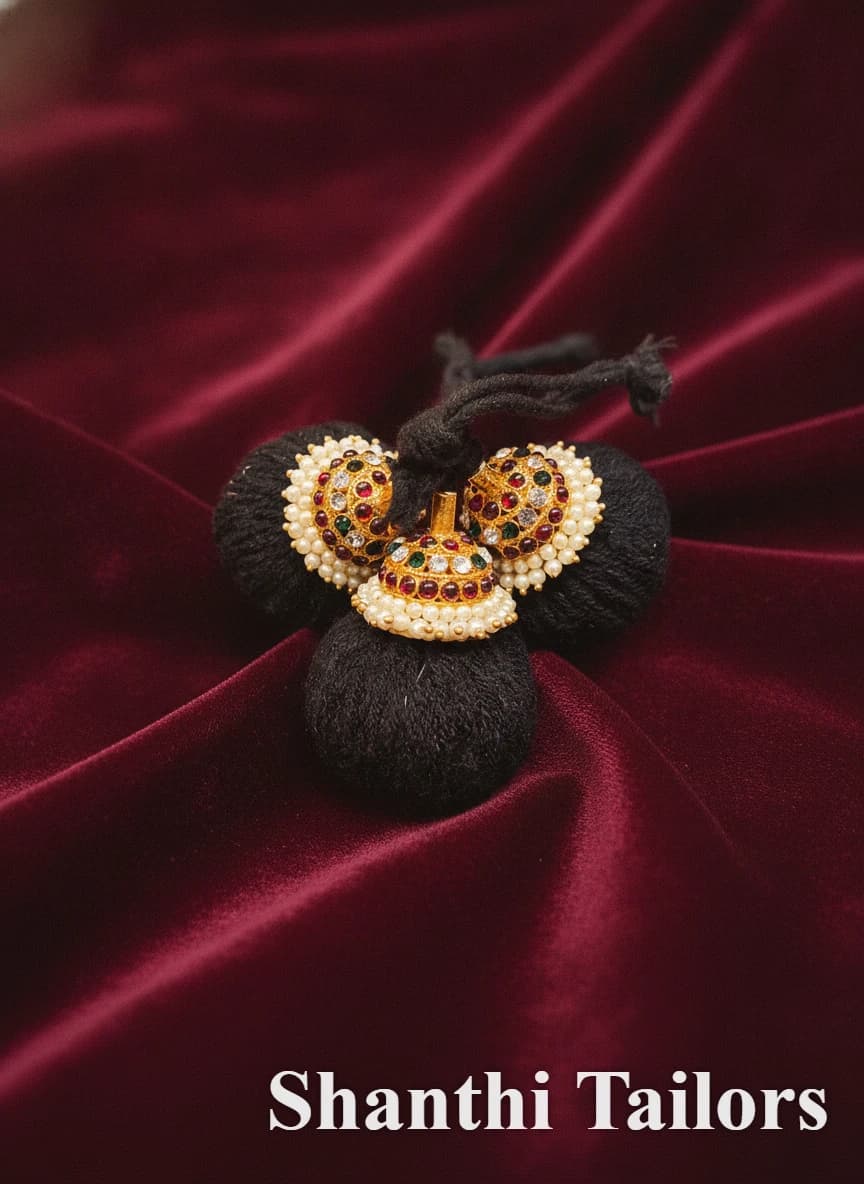
Ball Kunjalam| Dance Accessories - Hair Accessories
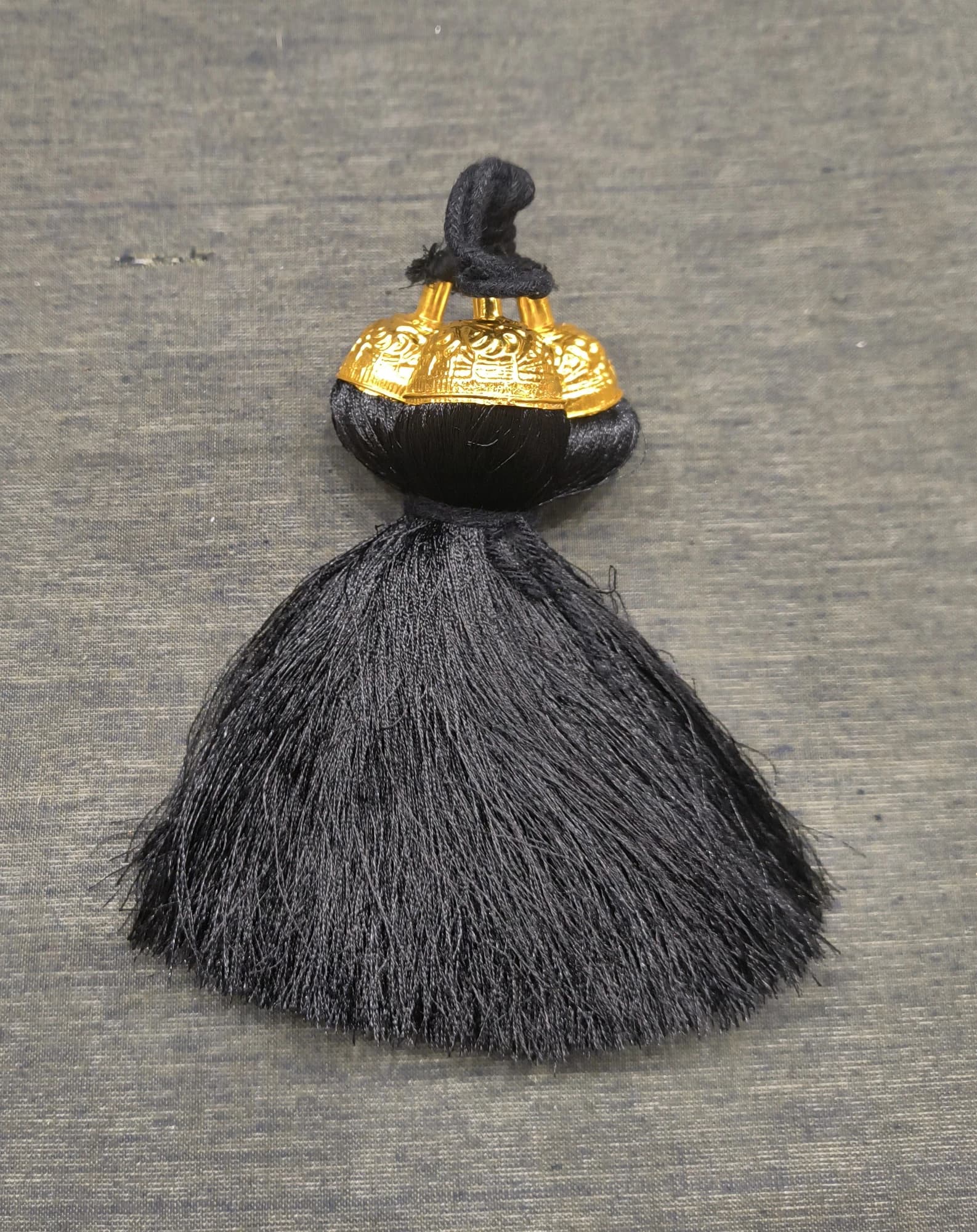
Hair Kunjalam | Dance Accessories | Bharatanatyam & Kuchipudi

Brown Buckle Salangai | Dance Bells | For Bharatnatyam and Kuchipidi ghungroo

Black Buckle Salangai | Dance Bells | For Bharatnatyam and Kuchipidi ghungroo
Shanthi Tailors Editorial
Shanthi Tailors has crafted classical dance costumes and temple jewellery in Chennai since 1967, dressing dancers for arangetrams and stages worldwide.