Expert Guide · Since 1967
Kuchipudi vs Bharatanatyam: Costume Differences Explained
Bharatanatyam and Kuchipudi share the same classical roots, but their costumes tell different stories. If you're ordering for the first time — or buying for a student who dances both — understanding the differences saves you from getting the wrong costume. Here's a complete comparison.
The Silhouette
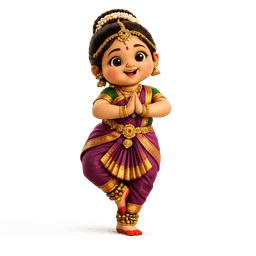
Bharatanatyam costume: characterised by a fitted stitched blouse + a koorai (skirt) with a distinctive front fan-piece that opens like a peacock's tail during footwork. The silhouette is angular and structured. Kuchipudi costume: traditionally uses a saree draped in a specific style (the 'Kuchipudi drape') rather than a stitched costume. However, many contemporary Kuchipudi dancers use a stitched version similar in structure to Bharatanatyam but with differences in the fan piece and length.
Fabric
Both forms traditionally use Kanchipuram or Mysore silk. Bharatanatyam costumes tend to use heavier silk with wider zari borders. Kuchipudi silk is often lighter and the colour palette traditionally includes a lot of white, green, and red — though contemporary Kuchipudi uses the full spectrum.
Colours
Bharatanatyam: wide range of colours — red, green, blue, yellow, magenta. Red is most iconic. Kuchipudi: traditionally red and green are most common; white is reserved for specific characters. In modern performances, the range has expanded, but a Kuchipudi student's first costume is often red and green.
Jewellery
Both forms use temple jewellery. The sets are largely the same — necklace, haram, mattal, oddiyanam, silambu. The key difference: Bharatanatyam traditionally uses kemp (red stone) jewellery, while Kuchipudi jewellery may include more white/pearl elements. Both use antique gold finish.
The Fan Piece
The most visible difference. Bharatanatyam: the fan piece pleats forward, creating a characteristic inverted V shape at the front when the dancer is in aramandi (half-sitting position). Kuchipudi: the drape differs — in the traditional saree style, there is no fan piece. In stitched Kuchipudi costumes, the fan piece is often narrower and drapes slightly differently.
Which Should You Order?
Order based on the dance form your student is being trained in — confirm with their guru. If a student trains in both forms, they'll need separate costumes (the stitching and drape are genuinely different). When in doubt, call us — describing the guru's style helps us advise the right cut.
Frequently Asked Questions
Can the same costume be used for both Bharatanatyam and Kuchipudi?
Not ideally. The cut, fan piece, and drape differ. A Bharatanatyam costume used for Kuchipudi (or vice versa) will look wrong to a knowledgeable audience. For arangetrams specifically, always order the form-specific costume.
What is the typical colour for a Kuchipudi arangetram costume?
Red and green is the most traditional combination for Kuchipudi, though many dancers now choose other vibrant colours. Confirm with your guru — many have specific preferences for the arangetram costume.
Is Kuchipudi jewellery different from Bharatanatyam jewellery?
The core set is very similar. Kuchipudi may include slightly more white/pearl elements and sometimes a different necklace style. Both use antique gold-finish temple jewellery. The same set can often serve both forms for regular performances.
Do you stitch Kuchipudi costumes?
Yes. Shanthi Tailors has been stitching Kuchipudi costumes since 1967. We stitch both the traditional saree-style drape version and the contemporary stitched version. Share your guru's preference when ordering.
More Expert Guides
Need personalised help?
Our team has dressed thousands of dancers since 1967. Talk to us — we'll guide you to the right choice.