Bharatanatyam Dance Class Uniforms | Top & Bottom Set | Cotton dance
Standardize Your Classroom with Premium Cotton Uniforms.
Built for daily practice. Trusted by dance schools worldwide.
Our Promise of Performance & Consistency
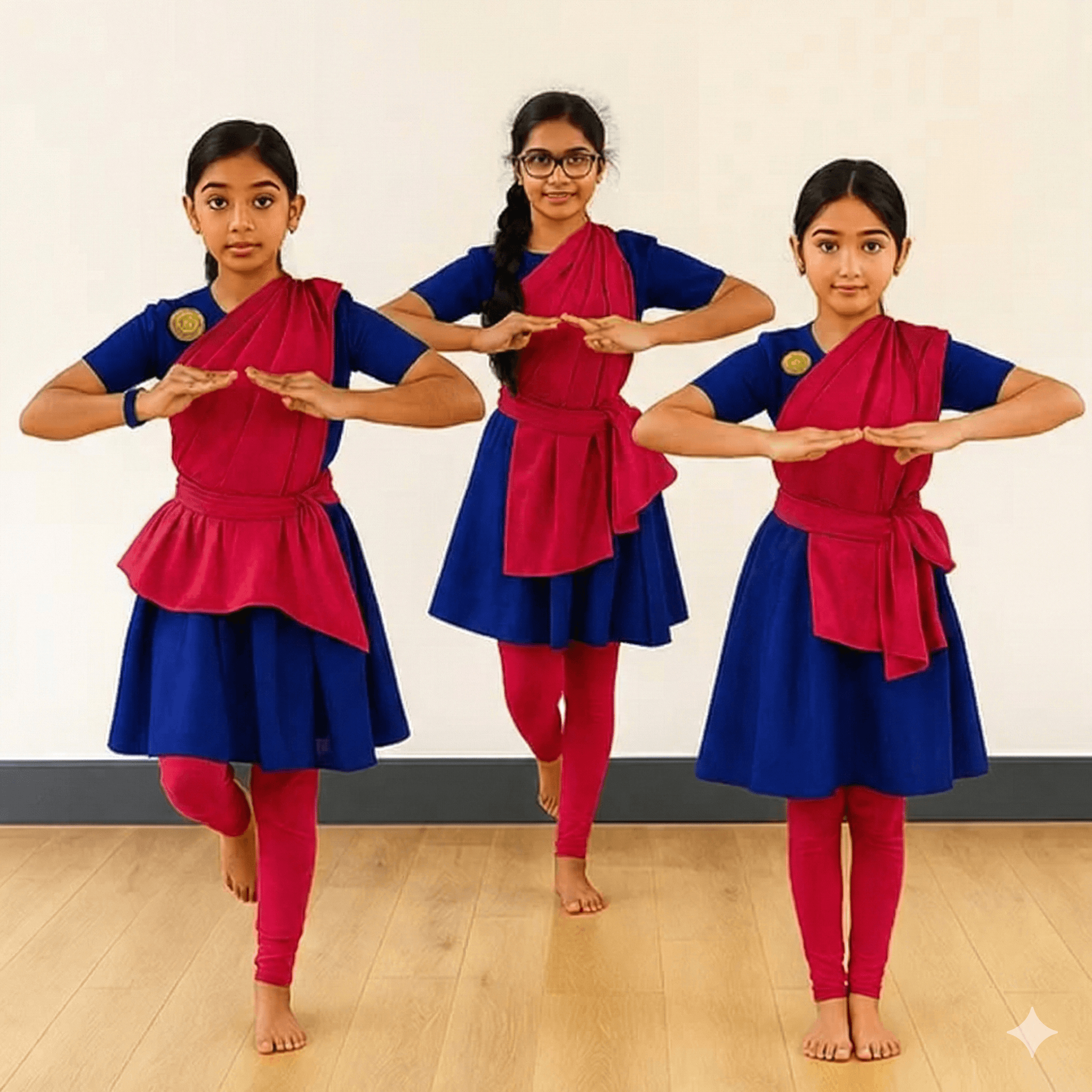
Our Bharatanatyam Dance Class Uniform collection is designed specifically for dance teachers and school administrators who need dependable, long-lasting uniforms for bulk usage.
Every uniform is made using premium cotton fabrics that are Color-Fast (won’t fade even after repeated washing) and Shrink-Resistant, maintaining uniform appearance throughout the academic year. With Durable Stitching, these uniforms withstand intense daily practice, stretching, and frequent laundering.
Available Uniform Styles
Cotton Dance Practice Saree
Breathable, lightweight cotton sarees designed for comfort, discipline, and easy movement during long practice hours.
Churidar Uniforms / Stitched Salwar Suits
Ready-to-wear stitched uniforms offering consistent sizing, neat appearance, and faster class preparation.
Planning a Bulk Order?
Buying for 10+ students? Contact us for School Wholesale Pricing, size coordination, repeat orders, and international shipping support.
We supply premium Bharatanatyam Dance Class Uniform, Churidar Uniforms, and Cotton Dance Practice Saree collections with durable stitching to dance schools and institutions across the USA, Canada, and UK.
Frequently Asked Questions
The traditional dress for Bharatanatyam is called a "Bharatanatyam costume" or simply a "dance costume."
Yes, Bharatanatyam is a traditional Indian classical dance form that originated in the temples of Tamil Nadu.
Bharatanatyam costumes are typically made with silk sarees, specifically Kanchipuram silk sarees, known for their rich texture and vibrant colors.
To measure for a Bharatanatyam costume, one needs to measure the length from the waist to the ankle, hip circumference, chest circumference, and shoulder width for a proper fit.
The four styles of Bharatanatyam are Vazhuvoor, Pandanallur, Thanjavur, and Kalakshetra.
The seven elements of Bharatanatyam are Nritta (pure dance), Nritya (expressive dance), Natya (dramatic element), Vachika (speech), Aharya (costume and ornaments), Satvika (emotional connect), and Angika (body movements).
There is no definitive "best" style of Bharatanatyam; it depends on personal preference and the dancer's training. Each style has its unique characteristics and beauty.
The three 'N's of Bharatanatyam are Natya (dramatic expression), Nritya (rhythmic movement), and Nritta (pure dance movements).
The nine emotions portrayed in Bharatanatyam are love, laughter, fury, compassion, disgust, wonder, courage, fear, and peace.
In Bharatanatyam, the five fingers are called Tarjani (index finger), Madhyama (middle finger), Anamika (ring finger), Kanishthika (little finger), and Angushtha (thumb).
Bharatanatyam comprises a vast array of poses, but there isn't a fixed number. Dancers learn numerous unique postures, each with specific meanings and expressions.