The Unsung Heartbeat of Bharatanatyam: Nattuvangam and the Nattuvanar
The rhythmic pulse of Bharatanatyam: Nattuvangam cymbals and the invisible conductor of the dance.
🎧 Listen to this article
The rhythmic pulse of Bharatanatyam: Nattuvangam cymbals and the invisible conductor of the dance.

I. Introduction: What Is Nattuvangam in Bharatanatyam?
Ever watched a Bharatanatyam performance and been mesmerized by the dancer’s intricate footwork and expressions, and wondered who controls the rhythm behind it all? That hidden maestro is Nattuvangam – the art of rhythmic recitation and cymbals that silently conducts the entire performance. This is not just background sound; it is the heartbeat that organizes every step, every gesture, and every flourish. In this piece, the spotlight turns to Nattuvangam and the extraordinary artists who wield it, the Nattuvanars, to unravel their history, challenges, and future.
II. Nattuvangam 101: Rhythm, Cymbals, and the Nattuvanar
Think of Nattuvangam as the dance’s rhythmic dialogue – the precise vocal recitation of rhythmic syllables (“sollukattu”) perfectly synchronized with the resonant clang of cymbals (“talam”). At its helm stands the Nattuvanar, the rhythmic architect of Bharatanatyam. The Nattuvanar is far more than someone holding cymbals; this figure is a multifaceted maestro: rhythmic guide, conductor, coordinator, teacher, mentor, choreographer, composer, and often a trained musician. As the bridge between music and movement, the Nattuvanar cues, shapes, and supports the dancer’s every move.
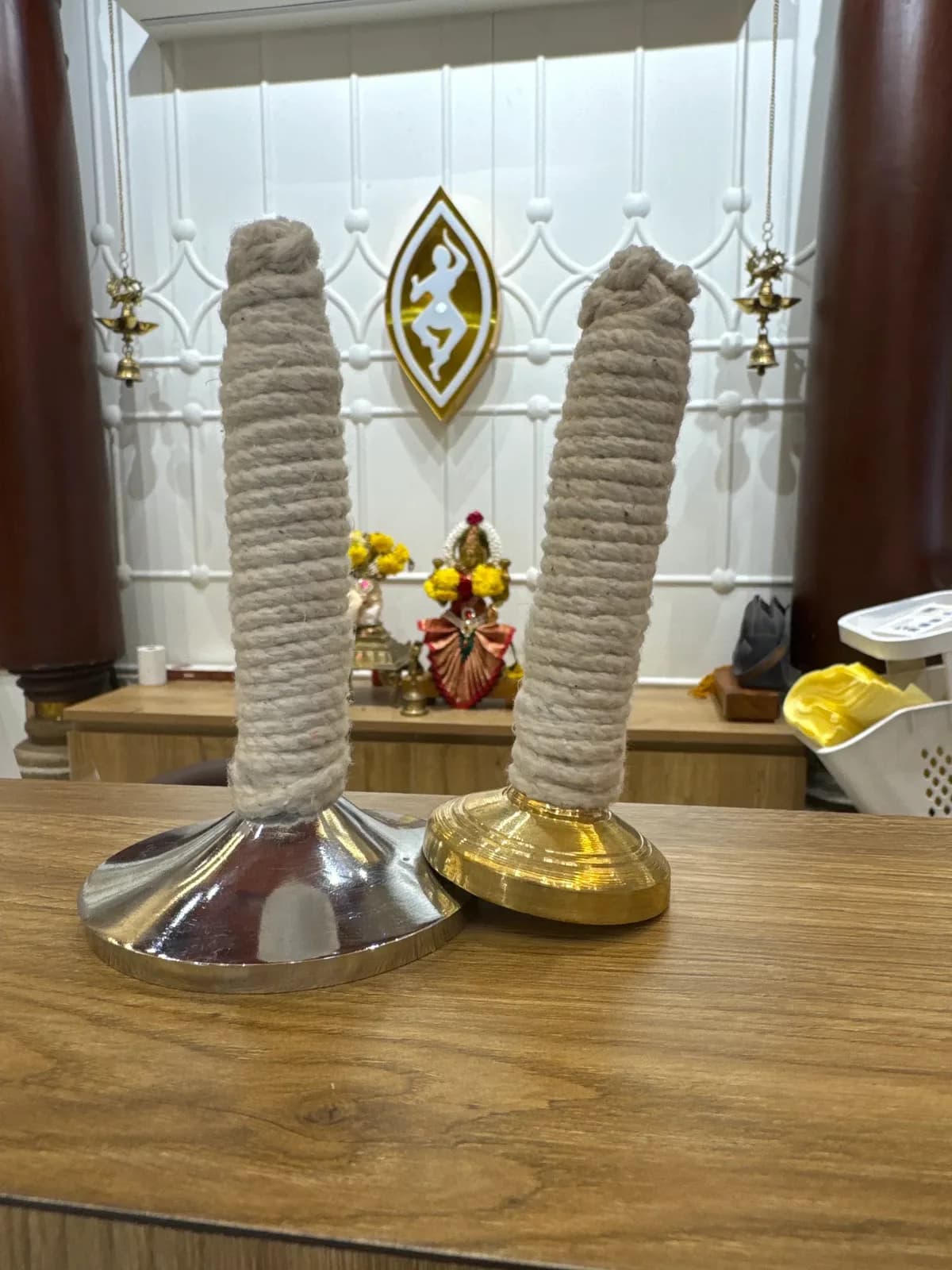
Those distinctive metal cymbals are central to the sound of Nattuvangam in Bharatanatyam. The “thattu” is generally the larger cymbal, producing a deeper or bass-like tone, while the “kuzhi” is smaller and creates a sharper, treble sound. Their intricate interplay mirrors the dancer’s footwork, accenting beats, highlighting intricate jatis, and anchoring complex rhythmic patterns. In many ways, Nattuvangam functions as the “rhythmic soul” of South Indian classical dance.
III. A Journey Through Time: History of Nattuvangam and the Nattuvanar
The roots of Nattuvangam stretch deep into the history of Indian performance traditions. Its theoretical foundations can be traced to ancient treatises like the Natya Shastra and literary works such as the Tamil epic Silappatikaram, which discuss rhythm, gesture, and the integration of music and movement. Temple sculptures and inscriptions from centuries ago also hint at the presence of a leader or conductor guiding dance and music, suggesting that the role we now call the Nattuvanar has very old antecedents.
Historically, Nattuvanars were closely linked to the Devadasi system and hereditary dance families, playing a central role in training, choreographing, and presenting performances in temples and courts. The term “Nattuvanar” is often traced back several centuries, evolving from earlier roles and references within these traditions. The 19th century saw a serious decline in both Bharatanatyam (then often called Sadir) and the status of hereditary Nattuvanars, due to changing social, political, and moral climates. In the 20th century, revivalists such as E. Krishna Iyer and Rukmini Devi Arundale helped reframe and popularize Bharatanatyam for new audiences, creating a renewed demand for skilled Nattuvanars.
Rukmini Devi Arundale, in particular, became a trailblazer: she not only helped take Bharatanatyam to national and international stages but also broke norms by becoming one of the prominent female figures to assume roles associated with Nattuvangam and by teaching men to dance. Traditionally, a Nattuvanar was expected to embody “naalvakayaana gunam” – comprehensive knowledge of dance, music, literature, and rhythm – essentially the complete artistic personality.
IV. The Modern Rhythm: Nattuvangam Today
In contemporary Bharatanatyam, the Nattuvanar is often described as the “Sutradhar” or coordinator of the performance. The Nattuvanar maintains a continuous, finely tuned dialogue with the dancer, vocalist, and percussionist, shaping tempo, emphasis, and dynamics to create a cohesive aesthetic experience. As custodians of tradition, many Nattuvanars preserve rare compositions, subtle rhythmic variations, and stylistic nuances passed down through generations.
At the same time, today’s Nattuvanars are also active innovators. They blend traditional structures with contemporary themes, experiment with new rhythmic patterns, and compose fresh jatis and korvais. Yet there is also a growing concern: in some contexts, the Nattuvanar’s role has shifted from authoritative conductor to secondary accompanist, with the dancer placed firmly at the center. Some veteran Nattuvanars worry that dancers and even teachers can sometimes have “half-baked knowledge” of Nattuvangam’s deeper musical and rhythmic layers, leading the Nattuvanar to follow rather than guide. A powerful positive shift, however, is the increasing number of women rigorously learning and teaching Nattuvangam, challenging older gender norms and diversifying the field.
V. Ruffled Feathers and Deep Discussions: Controversies Around the Beat
One of the most debated issues today concerns recognition and authority. The Nattuvanar was once the undisputed conductor of the entire Bharatanatyam performance, but is now sometimes treated as just another accompanist, not even regarded as a central “instrument” in the ensemble. This raises questions about hierarchy, visibility, and the preservation of the Nattuvanar’s comprehensive artistic authority on stage.
The 20th-century revival of Bharatanatyam also involved a complicated and often painful process of “sanitization.” As the Devadasi system was dismantled, Bharatanatyam was reshaped under the influence of Brahminical patriarchy and Victorian moral frameworks. This process frequently marginalized or erased the contributions of hereditary Devadasi dancers and Nattuvanars, even while their repertoire and techniques were absorbed into the “classical” canon. Recent public controversies and remarks about Bharatanatyam’s origins and “purity” reveal how historical narratives continue to be contested and how they can sideline hereditary artists.
Teaching methods have also undergone dramatic change. The traditional guru–shishya parampara, in which a guru sculpted each student over years of immersive training, has in many places given way to more “item-focused” or exam-oriented approaches. This raises the question: is depth being sacrificed for breadth and speed? The rising cost of live orchestras leads some performances and classes to rely on recorded music, which can reduce the spontaneity, real-time interaction, and subtle give-and-take that are hallmarks of a Nattuvangam-led performance.
VI. The Future of the Footwork: Nattuvangam’s Path Ahead
Despite these challenges, the future of Nattuvangam holds exciting possibilities. Nattuvangam is becoming more accessible, with well-trained men and women from diverse backgrounds studying it seriously, and with online classes, workshops, and lecture-demonstrations making learning possible across the globe. The key challenge will be ensuring that this wider access is matched by depth – that students not only learn to keep talam but also understand its musical, historical, and aesthetic richness.
Artists are already pushing boundaries: exploring rare and complex talas, composing new jatis, and creating works that blend tradition with innovative ideas and cross-genre collaborations. Large-scale Nattuvangam initiatives, thematic productions, and academic discussions are helping to place Nattuvangam at the center of research and practice. Structured syllabi and formal courses in Nattuvangam aim to systematize knowledge while honoring the ethos of the guru–shishya parampara.
There is also a growing movement to restore the Nattuvanar to a position of “pride of place” – not just as an accompanist, but as the true Sutradhar who orchestrates the entire Bharatanatyam experience. This includes acknowledging hereditary lineages, giving Nattuvanars due credit in performance publicity, and recognizing Nattuvangam as a sophisticated art in its own right, not merely a support function.
VII. Conclusion: Honoring the Rhythmic Heart of Bharatanatyam
Nattuvangam is far more than a set of beats; it is the pulsating heart, guiding voice, and living memory of Bharatanatyam. The Nattuvanar, with deep knowledge of rhythm, music, literature, and dance, stands at the center of this intricate web of sound and movement. As Bharatanatyam continues to evolve, travel, and transform, it becomes ever more important to recognize, celebrate, and support the invaluable role of the Nattuvanar – the often-unsung artist who brings the form to life, one perfectly placed beat at a time.
Shanthi Tailors Editorial
Shanthi Tailors has crafted classical dance costumes and temple jewellery in Chennai since 1967, dressing dancers for arangetrams and stages worldwide.